The true power of malachite lies not in high durability but in its vibrant beauty and cultural significance; remember, its value comes from how you handle and appreciate it, not just from myths of unbreakable strength—focus on its soft nature and unique patterns to make smarter choices.
Imagine you're browsing a crowded craft fair, eyeing a stunning green stone pendant displayed beside claims like "powerful energy" or "lasts forever." But when you ask the vendor, their answers feel vague—does "powerful" refer to hardness, color, or something mystical? You've probably heard similar contradictions: online forums debating if malachite can scratch easily, jewelry stores calling it "uniquely durable," or even friends showing chipped pieces. It's confusing because terms like strength get thrown around loosely, hiding the facts. This article tackles those messy realities, separating wishful thinking from verifiable traits across key points—like chemical makeup or daily care—so you learn to spot what truly matters when choosing or handling such items. Let's unravel the story, starting with the fundamentals.
Picture this: you're in a cozy gift shop, holding a malachite egg that feels cool and heavier than expected, while a sign calls it "an earth treasure of immense power." That word "power" gets tossed onto display tags without explanation—maybe implying energy, sturdiness, or allure. It sticks because malachite's deep green bands evoke a primal richness, leading sellers to use vague appeals that ignore measurable aspects. This romantic language flourishes in boutiques and online listings, where photos focus on visual drama, not technical limits.
In reality, the clearer way to see it is that malachite's attributes, while compelling, stem from tangible science. Technically speaking, its chemical formula—Cu₂CO₃(OH)₂—means it's a copper-based mineral with carbonate elements that influence brittleness. Specific gravity often measures between 3.6 and 4.0 g/cm³, accounting for that noticeable heft when you cradle it, but this doesn't equal robust durability. Rather than magical might, power here connects to symbolism; malachite can historically represent protection in cultural contexts without physical dominance.
What this means for you: When someone markets malachite as "powerful," pause and run a mini-check you can do while shopping. First, examine weight—does the item feel unnaturally dense? That can signal authenticity but not strength. Then, notice banding patterns; distinct layers align with geological history, not some energetic flow. Focus on these clues over buzzwords, so next time you see claims of "earth power," recall reality: it's about beauty that may shift in your hands, not eternal armor.
A friend of yours once ordered a malachite bookend online, gushing about its "pure copper magic" over coffee. But they worried when the surface developed a chalky residue after weeks—was this a defect or normal? This shows how intuition paints malachite as a straightforward mineral, fueled by ads highlighting its copper hues while skipping scientific nuances. People default to simple analogies, like calling it "copper in rock form," but this overlooks risks like acidity sensitivity that affect performance.
In reality, malachite is a basic copper carbonate mineral with bonds that may be vulnerable. The clearer way to see it is that its makeup involves carbon, oxygen, and hydroxyl groups interacting; exposure to acids or harsh cleaners tends to cause dissolution slowly over months, explaining surface changes. This formula makes copper readily react, which is why malachite often forms pseudomorphs—where it replaces minerals like azurite in oxidation processes—adding layers to its identity. Don't think of it as inert metal; it's a dynamic compound with limits.
How to check this correctly: If you're picking malachite decor, turn it over and imagine where it'll sit—avoid kitchens or humid bathrooms to sidestep chemical mishaps. Ask sellers about care needs in casual chats; if they avoid discussing composition, doubt general claims. Remember, malachite's "power" comes from stability in controlled settings, not unfailing resistance.
Imagine unpacking a malachite ring from its velvet box, inspired by social media posts praising its "unbreakable elegance." Yet, after a few outings, you notice faint scratches, leaving you puzzled—did you get a dud? It's a common shock because malachite's vividness tricks people into expecting toughness like that of quartz, while sellers often dodge truths about its low Mohs score to boost sales. This gap between look and feel causes confusion, especially in jewelry sections where durability claims run wild.
In reality, the truth balances soft charm and vulnerability. Technically speaking, malachite exhibits a hardness rating between 3.5 and 4, falling short for rough handling; it may scratch easily with everyday knocks. Specific gravity adds to its solid heft, but this mass doesn't strengthen it—in fact, it can make chips more likely during drops. Over time, abrasion from dust or contact tends to wear luster, so its "power" lies in gentler applications, not rugged use.
How to read this correctly for your choices: Before choosing malachite, run a quick fingertip test mentally—remind yourself that even soft keys might scuff it. Opt for pieces with protective bezels in settings that shield edges from impacts. Picture where you'll store it—a cushioned box can prevent scratches. Don't be swayed by aesthetics alone; combine this know-how with visual checks to build confidence.

When admiring malachite's patterns, assess fragility too—think about daily risks like handbags and countertops to gauge suitability.
Picture yourself window-shopping, drawn to malachite earrings glowing with emerald waves under spotlights; the brochure labels them "eternally green," setting unrealistic hopes. But after years, those bands might dull subtly, a shift unnoticed until you compare photos—why does this happen? Advertisers overplay malachite's color intensity to evoke timelessness, capitalizing on natural banding that creates optical depth. Yet, oxidation influences hues over seasons, leading some to label shifts as spiritual signs rather than simple chemistry.
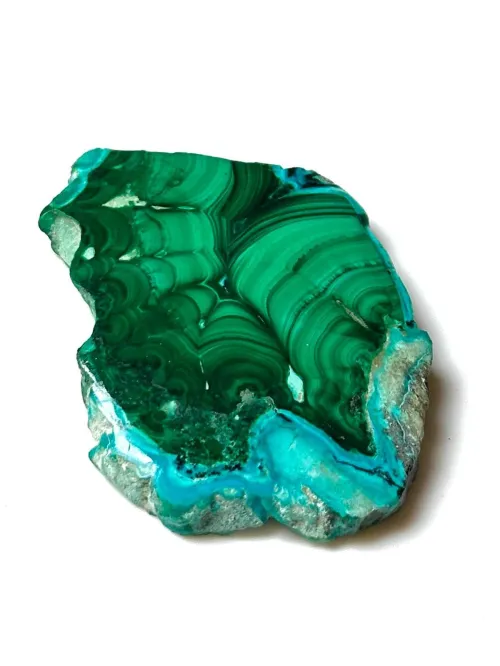
The truth grounds expectations in verifiable trends. In reality, malachite displays banded patterns with alternating light and dark green layers due to mineral formations. Bright emerald to deep forest shades vary based on oxidation states, which can subtly change with oxygen exposure. Typically opaque, it may present a silky or vitreous luster when polished, enhancing allure rather than permanence—visual properties that remain striking but require maintenance to preserve.
How to judge this: Next time you see malachite art, examine it under varied lights to spot natural variations, not assume uniformity. In discussions, ask about long-term color care; if the answer ignores prevention steps, reconsider. By linking beauty to upkeep, you'll see "power" as sustainable artistry, not magical defiance.
A friend of yours once shared an heirloom malachite vase, calling it "an exotic power stone from deep mines." Their story echoed tales of remote Russian caves or African treasures, making you wonder—is malachite truly scarce? This glamor stems from travel shows and seller dramatizations, where sources become mystical to justify prices and imply strength. But malachite forms widely as botryoidal masses in accessible copper regions, contradicting notions of singular power spots.
In reality, nature makes malachite through everyday weathering, so locations span continents without secrecy. It naturally forms as botryoidal or stalactitic masses in secondary copper deposits globally, sourced from places like Russia, Africa, and parts of the southwestern United States. This means supply tends to be ample, with value influenced by pattern uniqueness or size, not just scarcity. The mineral replaces others slowly over eras, turning common formations into personal artifacts.
How to view it wisely: Hearing about "exotic origins" at a shop? Verify with facts—if sellers push rarity as power, note that broader sourcing may lower costs. Reflect on formation; it can remind you that like malachite, many wonders start with plain processes. This reduces hype-based decisions.
Imagine a Sunday market, where a vendor showcases malachite carvings as "ancient shields against negativity." You might buy a piece for décor, then debate with pals about using it daily—is it practical? Such chats reveal how malachite's applications blend historical weight, like symbolic talisman roles, with modern aesthetics, yet practicality issues crop up. Traditional narratives exaggerate protective qualities, leading today's online trends to overlook durability limits in jewelry or decorations.
The practical side demystifies it. Historically, cultural symbolism tied malachite to talismanic uses, but now it may be cut into cabochons for accessories or carved into art for ornamental appeal. Visual versatility makes it shine in decorative arts and lifestyle items, though low hardness restricts heavy-duty functions. Long-term value may hinge on color intensity or pattern uniqueness for collectors, so "power" here aligns with artistry not invincibility.
How to apply it smartly: Consider malachite for display cases or pendants, not rough-touch items. At friend gatherings, discuss real uses—like avoiding rings for high-impact activities. Match applications to features; for instance, banded patterns excel in statement pieces. This avoids magical thinking and grounds choices in reality.
Picture unpacking a malachite statue after shipping, thrilled by its beauty, but dust clouds rise while unboxing—what happens if inhaled? Buyers often skip care steps, assuming it "lasts without fuss," ignoring warnings because glossy ads minimize maintenance. This neglect ties to a false sense of innate power, where users focus on looks alone; worse, dust particles can pose health risks during handling.
The care plan balances enjoyment and caution. Malachite's low hardness means it tends to scratch or chip under pressure and exposure to acids may dissolve surfaces. Gentle washing with water and soft cloth preserves luster best. Safe handling minimizes dust inhalation in workshops, while preventive measures like protective settings extend life. This shift from "set-it-and-forget-it" to mindful upkeep redefines power as active stewardship.
How to approach maintenance: Before handling, think of cleaning routines—swipe surfaces gently, and use gloves if dusty. When debating purchases, prioritize sellers offering care tips. Build habits like storing malachite separately to avoid abrasion; these steps empower you to enjoy its charm sustainably.
The next time you're in a market, browsing malachite treasures, pause and use what we've explored: check for banding patterns to appreciate geology, test weight against known density, and consider care needs upfront. If you recall how low hardness shapes usage or why color intensity relates to oxidation, you'll avoid oversimplified claims. Don't absorb one vendor's pitch—instead, bring that critical eye to online searches or chats. Ask: Which traits prove malachite fits my life? This builds power through knowledge, letting you own the story.
Q: Can malachite be worn in rings regularly without damage?
A: Rings tend to face daily knocks, but malachite’s low hardness makes it prone to scratches or chips; protective settings may reduce risks for cautious wearers.
Q: Does malachite fade completely in sunlight or just alter subtly?
A: Prolonged sun exposure can shift its green hues due to oxidation over time, though changes usually happen gradually and vary by color intensity.
Q: How does malachite compare to other green stones for durability?
A: Malachite may scratch easier than harder stones like jade, with Mohs ratings indicating it suits lower-impact items better.


$
