Malachite doesn't hold a single magical meaning, despite popular depictions. This green mineral, scientifically understood through its copper-carbonate formation and distinctive banding, has gathered cultural associations through human history. If you remember one thing: The representations and **symbolism** tied to malachite—such as growth or protection—stem almost entirely from its visual characteristics and historical context, not inherent metaphysical properties.
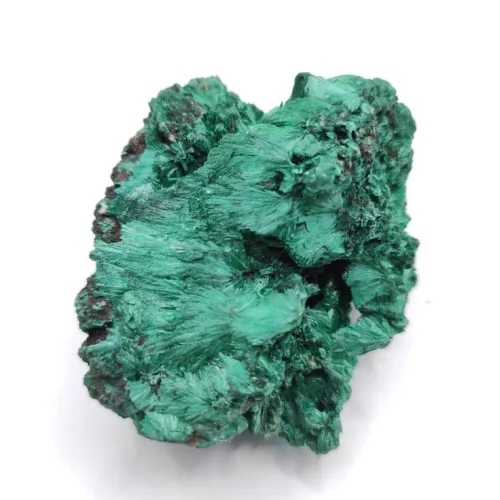
Imagine browsing a jewelry store, drawn to a stunning green pendant. The clerk describes it as a "stone of transformation and positive growth." Later, online, another site promotes malachite as essential for "warding off negative energies." These varied, often confident proclamations about what malachite 'represents' or **means** can leave anyone puzzled. Is this about science, symbolism, or salesmanship? This article untangles the common associations about malachite from its verifiable mineral makeup and cultural history, helping you distinguish subjective interpretations from objective facts next time you encounter this eye-catching stone.
In New Age shops or art descriptions, you'll frequently hear malachite represents "transformation" or "positive change." Picture this: a friend excitedly shows you their new bracelet, bought specifically because "malachite aids personal growth." This association springs directly from its vivid green color – a universal visual cue associated with life, renewal, and flourishing vegetation in countless societies. Its banded layers literally show gradual accumulation, visually echoing concepts of progress. The connection feels intuitive but isn't rooted in the mineral's chemical behavior.
In reality, the "representation" stems from human psychology and visual metaphor. The clearer way to see it is through technical properties: Malachite is a copper carbonate mineral, Cu₂CO₃(OH)₂. Its characteristic green comes from copper content, not spiritual force. While cultural symbolism links deep green hues to growth or renewal due to associations with nature, this is an interpretation imposed *onto* the stone. Technically speaking, malachite's formation is a geological process; its bands document mineral deposition in oxidized copper ore zones over time.
How to check: When encountering claims about malachite's meaning, consider the source. Does the description focus solely on subjective interpretations ("energies," "transformation vibrations")? Or does it also mention the actual origin: the copper-derived color and stratified formation process? Ask: "Is this based on historical *use* in symbols, or on presenting an inherent property?" Look for mentions of its chemical composition or physical banding as the basis for visual metaphors.
You might stand admiring a museum exhibit, pointing at an intricately carved malachite box described as "protective." Your companion whispers, "Isn't it the copper inside creating that effect?" Here's where confusion often happens – the mineral itself versus its components. The widespread *idea* of malachite as protective stems partly from historical uses where copper alloys protected things practically (like roofs), and partly the 'logic' that a green copper stone must then passively channel that.
In reality, malachite's composition dictates its physical behavior, not symbolic properties. Its chemical formula is Cu₂CO₃(OH)₂ – a basic carbonate structurally. The copper content gives the vibrant color and makes it relatively heavy (density 3.6-4.0 g/cm³). Crucially, it tends to form in botryoidal masses or fibrous aggregates – those beautiful lumps and bundles – not as large, protective shields.
What this means for you: Next time you consider malachite's symbolic "strength" or "protection," also recall its technical properties. Notice its moderate hardness (3.5-4 on the Mohs scale), meaning it scratches fairly easily – a practical fact contrasting symbolic vigor. When assessing value or appeal, pay attention to the craftsmanship quality required to shape such a soft material, which influences price far more than any alleged metaphysical strength.
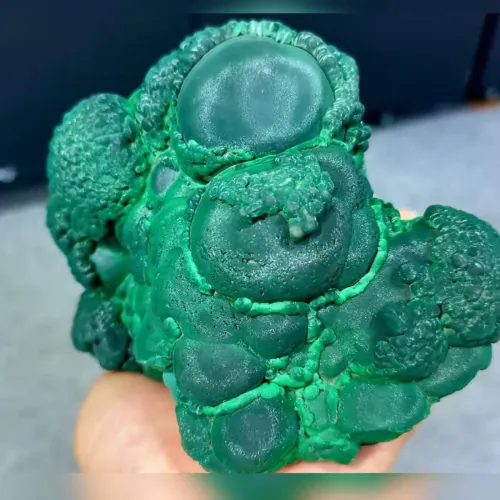
A friend excitedly unwraps malachite earrings, exclaiming about the patterns signifying "life cycles." Ad copy frequently plays up the swirling bands as evidence of "energy flow" or "ancient earth wisdom." This representation arises because the unique, concentric rings and eye-like shapes naturally captivate us and invite narrative projection. Humans instinctively see patterns and assign meaning.
In reality, the bands are sedimentary records, not cosmic messages. The visual characteristics – light to dark green bands – directly result from varying concentrations of copper and impurities like azurite during its slow precipitation in oxidizing environments. The luster is a physical property, typically silky to vitreous due to its micro-crystalline structure.
How to read this correctly: Train your eye to appreciate the geological story. Notice: the banding patterns? They document mineral deposition cycles over time. The color variations? Reflect copper concentration fluctuations. The luster? Tells you about crystal texture. When admiring a piece, the factual background – observing *how* the bands form and their connection to its formation process – often provides a deeper sense of connection than vague symbolic labels, grounding its uniqueness in tangible earth science.
Picture an antique map displayed beside malachite tchotchkes at a market stall. The seller might gesture, "Authentic Russian malachite – carries ancient wisdom!" This hints at a crucial point: the "representations" linked to malachite are deeply entangled with geography, mining history, and the wealth it generated. The association with "prosperity" isn't metaphysical; it echoes its historical role as a lucrative trade mineral extracted from places like Russia's Ural Mountains, Congo, or Australia.
The formation process – occurring near the Earth's surface in oxidized zones above copper deposits – made certain locales historically significant. Malachite was less 'endowed' with meaning than it was *valued* for its color and rarity locally. Its "significance" was often tied to economic power; Russian Tsars built lavish rooms (like the Malachite Room in the Hermitage) showcasing it as a display of imperial wealth, linking it to status long before New Age interpretations.
What this means for you: When encountering claims tying malachite's origin to special properties ("Siberian malachite vibrates differently"), connect it to the real history. Ask: Is the location celebrated because of the unique quality *or pattern variation* found there, or is a mystical cause implied? Consider how historical trade and cultural prestige shape the symbolic narratives we inherit. Value is often linked to documented origin and craftsmanship, not spiritual provenance.
Imagine an art class discussing historical pigments. The instructor holds up a green powder: "This is ground malachite, mined and used in Egyptian tombs." Later, browsing jewelry, you see expensive malachite cabochons. The practical applications throughout history – far beyond decoration – significantly influence how malachite was perceived and thus what it came to "represent" culturally. It had *use* value.
In reality, malachite's practical value stems from its characteristics. Its vivid color made it ideal as a pigment for paints across many cultures. Its relative softness means artisans can grind it into pigments or carve/shape it into beads, cabochons for jewelry, or stunning inlay work. Value assessment tends to focus on objective factors: the richness and depth of the green color, the uniqueness and contrast of the banding patterns, the craftsmanship quality visible in intricate carvings or polishing, and the rarity of uniform pieces.
How to check: Before associating malachite with symbolic promises like "abundance," observe its practical applications. Notice its beauty as decoration derived from natural mineral properties. When assessing price or investment potential, pay attention to the visible signs of quality: color saturation, pattern distinctiveness, the polish (surface luster), and the overall execution. These tangible factors directly impact value, making them more reliable guides than symbolic marketing claims.
A historian leads a tour through ancient artifacts: "Egyptians used malachite for cosmetics and protection amulets. Victorians displayed it as a sign of taste and wealth." Notice the context? The cultural symbolism associated with malachite – often linked to protection, prosperity, or power – isn't arbitrary. It arose from specific historical circumstances: its physical properties (dense pigment, distinctive appearance), geographical rarity, and practical uses. What gets presented now as inherent "energy" often stems from these historical functions mixed with later interpretations.
In reality, malachite gained symbolic weight through documented human interaction. Ancient peoples valued its vibrant pigment for art and cosmetics. Its association with protection likely began practically – powdered malachite has properties once thought healing or cosmetic, and copper itself was historically linked to defense. The link to prosperity directly correlates with its economic value as a mineral resource desired by elites, as seen in Russian Tsarist opulence. Cultural contexts tend to associate green stones with nature cycles, but the specific connection to malachite was amplified by its use-value and visual drama.
How to read this correctly: When hearing broad claims about cultural significance, seek the historical evidence. Was it *associated* with certain beliefs or practices (e.g., Egyptians using powdered green for eye paint)? Or is the claim implying inherent power? Look for distinctions between documented historical uses ("used *as* an amulet") and assertions of intrinsic power ("*is* an amulet"). Its representations reflect human history, not supernatural attributes.
Beyond symbolism, a crucial and often overlooked aspect is safety. You may hear the question: Is malachite poisonous? The answer is grounded in chemistry, not folklore. Malachite is toxic if its dust or particles are inhaled or ingested, due to its copper content. This raises a related and important point: is malachite toxic in water? The concern here is less about the water becoming poisonous to drink from brief contact, and more about the mineral itself degrading. Why is malachite toxic in water? Prolonged exposure to water, especially acidic water (like sweat or household cleaners), can cause the copper carbonate to leach out, damaging the stone's surface and potentially creating a toxic residue that should not be ingested.
This has direct implications for handling and wear. The risk is primarily to artisans cutting and polishing the raw stone without proper respiratory protection, or to anyone who might grind it and inhale the powder. For finished jewelry, the main concern is safe wear and maintenance: avoid wearing malachite rings or bracelets during activities involving chemicals or acids, and never use malachite to make elixirs or put it in drinking water. Its care requirements are a direct function of its chemical instability, not energetic sensitivity.
How this helps you: View malachite's toxicity as a material safety data sheet fact, not a mystical property. Handle raw specimens with care, ensuring good ventilation if any dust is created. For jewelry, the key is skin-safe sealing and common-sense precautions: remove it before swimming, cleaning, or exercising to prevent both damage to the stone and any potential skin irritation from prolonged exposure to leaching elements. Responsible ownership means respecting its physical and chemical nature.
Your friend admires her malachite ring, worried by whispers you heard: "Sunlight saps its energy!" The reality involves more mundane chemistry than cosmic forces. Confusion arises because malachite requires specific care, sometimes mistaken for evidence of mystical volatility. Seeing it chip or dull feels jarring against symbols of endurance and protection. This discrepancy between symbolic representation and physical reality is common.
Its beauty requires awareness of its material limitations. The copper carbonate structure that creates the vibrant green also contributes to its medium hardness (3.5-4 Mohs) and specific vulnerabilities. Durability tends to decrease when exposed to prolonged moisture or acidic substances (including sweat or citrus), potentially causing degradation or surface changes. Its softness makes it scratch-prone. Long-term upkeep involves protecting it from impacts and chemicals, storing it dry, and gentle cleaning. Regular polishing may help maintain its silky to vitreous luster over time.
How this helps you: Instead of interpreting care needs as "energetic sensitivity," see them as consequences of chemistry and structure. Protect your malachite as you would any delicate mineral artwork: avoid prolonged water exposure, harsh chemicals, pressure, and temperature extremes. Recognize that choosing it is choosing beautiful, temporary nature – its patterns are literally historical records trapped in sensitive stone. Responsible use involves understanding its boundaries realistically.
Malachite holds undeniable beauty, shaped by earth chemistry and human perception. Its swirling greens represent nature’s artistry perfectly. Remember: Its meaning comes from how people have used, valued, and described its visual power for millennia, not any hidden energy. Think about those Russian palaces – it stood for ambition and wealth, not vibrations.
What to do next? Apply these insights: next time you see malachite jewelry labeled with grand promises, pause before buying into magical thinking. Instead, consider these practical factors: Notice the true sources of its appeal – the vivid copper green, the hypnotic banding, and the expert craftsmanship shaping a challenging material. Ask: Are the claims describing its history or making mystical promises? Check product care instructions against mineral facts – proper maintenance avoids damage and preserves natural beauty. Malachite’s real gift? Helping us distinguish captivating stories from concrete geology.
Q: Does the shade of green in malachite change its "meaning"?
A: Lighter or darker greens simply reflect varying copper concentrations during formation. Culturally, deeper greens might be associated with richer earth or denser foliage, potentially influencing *interpretations* of abundance or protection historically. However, this isn't a change in inherent property but a visual cue that may guide symbolic association. Scientifically, all shades are variations of the same Cu₂CO₃(OH)₂ mineral.
Q: Is malachite toxic or dangerous to wear?
A: Properly finished and polished malachite jewelry is generally safe to wear against the skin. The primary toxicity risk comes from inhaling dust when the raw stone is cut or ground. However, because malachite is a copper carbonate, it can be degraded by acids and moisture. To be safe, avoid wearing it in situations where it might be exposed to harsh chemicals, sweat for prolonged periods, or impacts that could create dust. Never ingest malachite or use it to make "gem elixirs."
Q: Is it bad luck to buy malachite for yourself?
A: Luck associations stem purely from subjective folklore traditions, not mineralogical properties. Some cultures have specific gift-giving traditions for certain stones, but these vary widely and change over time. From a practical standpoint, responsibly sourced and maintained malachite carries aesthetic value regardless of who purchased it.
Q: Why is malachite sometimes combined with azurite?
A: Azurite (blue copper carbonate) and malachite (green copper carbonate) often form together in nature due to similar origins in oxidized copper deposits. This blending creates stunning blue-green patterns seen in minerals marketed as "azure-malachite." Their combination is geological chemistry, not spiritual design – requiring the same specific care due to copper carbonate softness.


$
