Malachite doesn't inherently attract love through mystical properties – its association stems from historical symbolism and psychological patterns rather than physical science. If you remember one thing, note that personal meaning and cultural narratives shape this perception more than the mineral's chemical composition or physical characteristics.
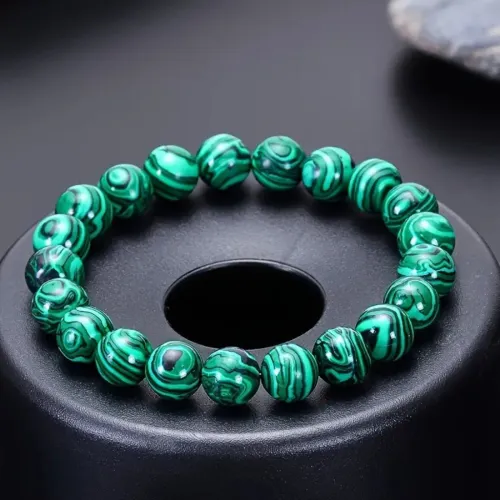
You're browsing a boutique jewelry case when that vivid green stone catches your eye. The salesperson shares how customers wear it for love and connection. Later, your friend swears her malachite pendant helped her find romance. Confusing, right? From ancient folklore to modern social media, explanations about malachite's relationship-enhancing power span vague spiritual claims to outright commercial hype. This article cuts through noise by examining how color psychology, mineral science, and cultural traditions interweave – separating verifiable facts from romanticized narratives to help you think critically. We'll explore geological origins to cultural symbolism, providing tangible frameworks to evaluate claims about minerals and emotional experiences.
Picture this: A small shop owner recommending malachite during your first-date jitters, explaining how its "frequencies" foster affection. This sentiment echoes across lifestyle blogs describing malachite as magnetizing romance. The appeal is partly rooted in visual intuition – its lush green evokes spring renewal and nature's cycles that humans instinctively associate with growth. Marketing terms like "heart crystal" further feed this narrative without clarification.
In reality, no verified scientific mechanism enables malachite to directly attract or influence interpersonal relationships. Studies about materials psychology indicate such associations typically come from cultural traditions (like how Victorians used malachite in romantic gifts) and psychological pattern recognition – if someone meets a partner while wearing malachite, they may connect the two events regardless of causation.
When encountering similar claims, note the context: Are love metaphors describing the stone's appearance? Is someone assigning meaning based on subjective experience? Consider tracking how personal associations versus demonstrated physical properties differ. You might observe your thoughts while holding malachite: Does its tactile heaviness or visual richness evoke certain feelings? This practice builds discernment between experiential reactions versus advertised claims.
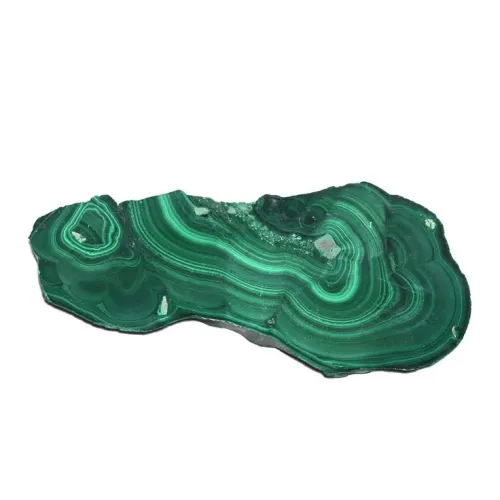
Imagine overhearing fellow shoppers debating whether copper content in malachite creates emotional warmth. Intrigued, you examine its scientific foundations since copper appears in warmth-conducting cookware. Malachite's composition (57% copper carbonate hydroxide) indeed facilitates distinctive banded formations called botryoidal aggregates, resembling organic patterns visible without magnification. This makes intuitive connections easy.
The clearer way to see it: Copper's presence determines malachite's green coloration through light absorption at 430nm wavelengths, but doesn't translate to human emotion transmission. Historical practical applications used its chemical properties – Egyptians grounded malachite for pigment, Russians crafted architectural columns – not interpersonal effects. Geologically speaking, it forms where water weathers copper deposits near limestone over millennia.
Next time you read about minerals and emotions, ask: What measurable property would enable this interaction? Could emotional responses be tied to a stone's color and texture rather than chemistry? Notice if physical descriptions (e.g., fibrous structures or chemical breakdown) remain factual when discussing emotional experiences.
A friend once showed you her malachite ring's concentric bands, describing them as "energy waves" smoothing relationship difficulties. This perception arises because visual complexity (varying forest-green to seafoam gradients in banded layers) feels dynamic and emotionally "alive" compared to uniform minerals. Jewelers also highlight how light plays differently across polished surfaces – silky to vitreous depending on cut orientation.
Technically speaking, these traits stem from optical characteristics: The alternating light/dark bands result from concentration variations in copper carbonate as the mineral formed through precipitation cycles. With a Mohs hardness of 3.5–4, the stone can withstand daily wear but remains vulnerable to impacts and scratches. Its heft (specific gravity 3.6–4.0) contributes to perceived substance.
How to interpret this practically: Appreciate malachite aesthetically as nature's artistry, while recognizing its durability limitations for jewelry worn daily. When physical sensations arise while handling it – like coolness from its density – enjoy the tangible response without assuming metaphysical messages. Remember that all visual pattern associations are cultural interpretations. Before buying malachite jewelry, consider where bands lie to emphasize its natural geometry.
A Russian folk story describes malachite as the "Stone of Transformation" – miners believed it granted renewal like the Ural Mountains' spring foliage. Cultural associations flourished through shared narratives over decades: Ancient Greeks linked it to Aphrodite's gardens, Renaissance Italians used it in love tokens, and Chinese traditions connected green stones with wood-element harmony. These weren't universal beliefs, but localized traditions that evolved as stones travelled trade routes connecting Congo mines with Parisian artisans.
In reality, recorded uses centered on practical applications. Malachite's pigment created Egyptian tomb paintings and Renaissance frescoes before synthetic greens existed. Royalty commissioned it for decorative objects (Tsar Nicholas I had malachite columns in Saint Isaac's Cathedral) to communicate power relationships, not love connections. When emotional narratives do appear – like Russian folk tales about malachite renewing hope – note they used nature metaphors during pre-scientific eras.
Decipher symbolic narratives by researching their timeframe and origins: Ask "When did this story emerge and for whom?" Next time you encounter claims about ancient crystal symbolism, cross-reference archaeological evidence versus contemporary reinterpretations. Ask what was historically verifiable versus what fits modern contexts.
Consider how malachite objects enter relationships: Someone gifts cabochon earrings during reconciliation; couples exchange malachite eggs celebrating new beginnings. Modern jewelry settings often include protective bezels due to cleavage fragility – a physical reality contradicting assumptions about unbreakable "connection energy." Contemporary designers leverage the stone as conversation pieces rather than metaphysical conduits.
What this means for you: Meaning develops through cultural context – a gift given thoughtfully may acquire sentimental resonance regardless of stone composition. If choosing malachite for emotional situations, base decisions on tangible qualities: Do you appreciate the patterns, color depth, and craftsmanship? This tangible appreciation tends to yield more satisfaction than chasing abstract promises.
Picture this: You remove a malachite ring before washing hands, avoiding water damage. Its porosity requires careful upkeep using soft cloths instead of chemical cleaners – protective sealing prevents acids or sweat from deteriorating banded layers. Such routines sometimes get interpreted as "energy cleansing rituals."
The technical perspective: Material interactions involve simple chemistry – malachite's carbonate composition reacts to acids (vinegar, lemon juice) causing irreversible dulling. Its light sensitivity makes occasional fading under extended sun exposure likely. Long-term integrity depends on minimizing environmental exposure – store separately to prevent scratches from harder gemstones.
When caring for malachite: Remember you're preserving mineral integrity, not mystical properties. If someone mentions "recharging" through moonlight, recognize how physical phenomena (light reflection on polished surfaces) may inspire poetic interpretations. Prioritize practical steps: Use padded boxes for storage, avoid ultrasonic cleaning, and clean gently with pH-neutral soaps.
A jewelry designer you admire shares how wearing malachite reminds them to nurture creativity – like its origins where copper transforms into beautiful patterns. This illustrates psychological anchoring: Objects become triggers for personal goals through associative practices rather than inherent magic.
How this shifts perception: Value stems subjectively from uniqueness – prized specimen qualities include color saturation, complex banding, and craftsmanship – making each stone distinct. Emotionally, the weight and coolness of quality malachite can serve as grounding touchstones during mindfulness exercises.
What this means for you: Personal meaning develops through intentional association, not passive reception. Malachite provides opportunities to explore why humans connect emotions to natural objects. Next time you notice a stone described as "attracting" specific life outcomes, try a three-layered analysis: Physical characteristics (what's measurable) → cultural meanings (how it's interpreted) → personal resonance (what it represents to you).
Recall entering that boutique – with clearer insight, you'd observe how lighting enhances color vibrancy, recognize marketing language describing cultural stories versus proven properties, and appreciate the stone’s geological narrative. You’d consider the setting’s structural protection for softer minerals and ask specific questions about origin. Remember: Emotional resonance arises from personal narratives and aesthetic appreciation, not transferred mineral properties. Future gem encounters become richer when separating poetic metaphors from physical truth. Before accepting claims, consider the science and history behind cultural symbols – then determine what meaning resonates authentically with your experiences.
Q: Does larger malachite have stronger "effects"?
A: Physical size may intensify visual impact and tactile sensation, which can influence emotional responses through psychological anchoring. There's no evidence of amplified physical properties beyond greater material volume requiring enhanced structural support.
Q: How do malachite origins affect meaning?
A: Congolese and Ural Mountain specimens vary in banding patterns due to geological conditions, affecting aesthetic value and carving potential rather than functionality. Regional mining traditions may inspire unique cultural interpretations that don't alter material composition.
Q: Can damaged malachite impact relationships?
A: Scratches or fading alter appearance and structural integrity, potentially diminishing personal sentimental value through damaged aesthetics. There's no credible mechanism through which physical deterioration can affect interpersonal dynamics.


$
