Malachite is a distinctively banded green mineral formed through copper deposit weathering, valued for its ornamental use but requiring careful handling due to its softness. Remember: its swirling emerald patterns tell deeper stories of geological transformation.
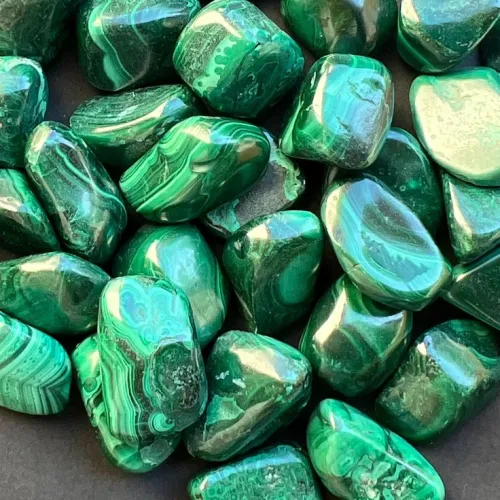
Picture flipping through a gemology magazine and seeing "malachite" interchangeably called emerald, jade, or even copperstone. A friend excitedly texts you a photo of green-tiled bathroom walls labeled "malachite finish," while an online forum debates whether heat treatments enhance its color. This swirl of confusion around the mineral comes from its visual complexity, historical name-dropping in art pigments, and geological connections to other copper ores. We'll journey through geological processes, jewelry workshops, and museum archives to untangle what truly defines malachite—separating marketing descriptions from mineralogical fingerprints you can verify for yourself.
Imagine browsing an artisan market where a vendor gestures to green-striped bookends saying, "Genuine malachite, straight from copper mines!" When we call something "malachite," we're often describing secondary formations—not primary copper ore, but layers formed when water transforms existing deposits. This misunderstanding surfaces frequently because the mineral predominantly appears in copper-rich zones, leading miners and sellers to emphasize that connection without explaining the transformation journey.
The clearer way to see it is: malachite specifically forms through secondary geological processes in copper deposits’ oxidation zones. Technically speaking, it develops as groundwater interacts with copper sulfides over centuries. While always copper-associated, what distinguishes it chemically is its identity as a carbonate mineral rather than elemental copper.
When considering jewelry or decor items labeled as malachite, focus on its formation story, not just "copper nearby." Ask vendors about origin specifics: Does it come from oxidizing zones? Is it described as secondary material? This shifts you from trusting proximity claims to understanding mineral genesis.
A friend once purchased a "wild malachite" pendant only to argue with a geologist about why its chalky residue rubbed off. That surprise comes from misunderstanding malachite's structure—it's not some hardened copper paste but crystalline chemistry. We expect minerals to behave uniformly, yet malachite’s monoclinic crystals can appear like velvet grapes (botryoidal) or dripping icicles (stalactitic), confusing newcomers who expect standard gem shapes.
In reality, this mineral maintains copper carbonate hydroxide consistency with a chemical formula of Cu₂CO₃(OH)₂. Its crystal system is monoclinic, naturally creating clustered formations that lapidaries cautiously polish into jewelry. Visual surfaces may show vitreous to silky luster, while fibrous aggregates can create unexpected optical effects like chatoyancy.
Next time you handle malachite, use magnification. Notice whether patterns emerge from crystalline structures or appear painted-on. Authentic pieces show integrated bands formed during mineral growth, not surface treatments. This helps distinguish natural wonders from convincing resin imitations sold online.
Picture this: you're comparing two green stones at a gem show—one priced at $50, the other $500. The seller points to swirling bands as "proof of premium malachite." However, banding alone doesn't guarantee authenticity or value; these characteristic rings form when mineral concentration fluctuates during growth. Common assumptions about density and durability backfire too—after all, museum collections contain malachite dishes but caution against using them.
Physically, malachite registers 3.5-4 on the Mohs hardness scale—softer than quartz jewelry or daily-wear turquoise stones. Specific gravity often falls between 3.6 and 4.0 due to copper concentration, making quality specimens surprisingly heavy for their size. Breakage shows uneven fractures rather than clean cleavages, while alternating emerald, seafoam, and blackish-green bands create its visual signature.
When evaluating pieces, combine three checks: heft them for unexpected weight (thanks to copper content), test with a thumbnail (genuine malachite scratches easily), and observe banding patterns under light. Authentic banding continues internally when chipped, while dyed items reveal white under-layers.
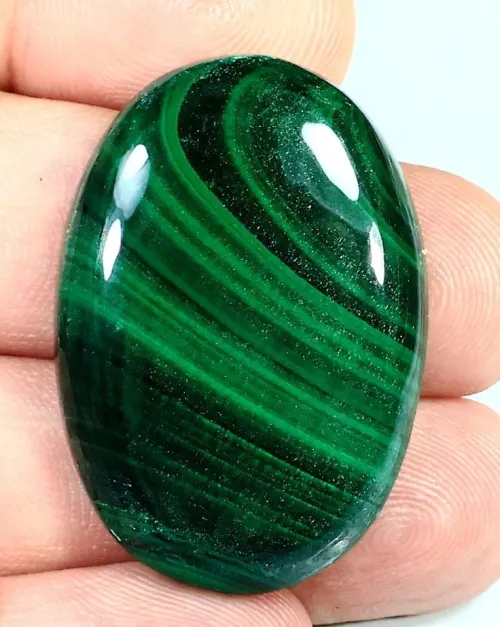
Jewelry requires compromise—adore the bands but understand that softer materials need protective settings. Band uniqueness dictates value more than size alone.
Imagine standing in a copper mine's oxidation zone—damp walls gleaming with green streaks between blue azurite patches. Many assume malachite emerges ready-made like quarried granite, but its creation resembles watercolor paintings where chemistry literally redraws geology. We misunderstand formation speed too; tour guides saying "minerals form over time" rarely clarify malachite requires centuries of groundwater seeping through copper-laden rock.
Technically speaking, it forms as carbonated water transforms primary copper deposits through weathering. Secondary processes in oxidation zones allow copper ions to bond with carbonate, slowly building into layers. Deposits frequently cluster near azurite or chrysocolla due to shared copper lineages—a useful indicator for rockhounds seeking genuine samples. Note its heat sensitivity: temperatures beyond 200°C may permanently darken colors.
When geotagging locations, observe neighboring minerals; true malachite often co-exists with bluish azurite or turquoise chrysocolla as copper’s colorful cousins. This contextual awareness prevents misidentifying similar-looking green minerals in the field.
While admiring Russian Imperial columns in St. Petersburg, a tour guide declares, "All finest malachite comes from Russia!" Such myths persist thanks to spectacular historical finds. Though Russia’s Ural mines yielded grand architectural slabs, modern deposits span Africa, Australia, and Arizona. Industrial-scale extraction typically uses open-pit or underground methods, but hobbyists frequently discover pieces in abandoned copper mines.
In reality, major sources shift across decades—as African copper belts now provide abundant specimens. Note: locality affects visual character. For example, Congo specimens may show denser banding than Australian finds. Still, chemical composition remains consistent worldwide due to universal formation requirements.
When buying region-specific malachite, request locality documentation. Reputable dealers provide mine origins, not just country names. Remember that while Russia historically dominated architectural extraction in the 1800s, today’s ethical sources might prioritize smaller-scale mines in Namibia or Chile.
A friend once gifted "malachite" coasters that faded around lemon wedge stains—a lesson in application mismatch. History remembers malachite ground into Renaissance paint pigments (copper green), yet modern lapidaries approach it as a delicate muse. Workshop artisans quietly know what museum displays don't show: transforming raw stone requires specialized tools to prevent fracturing during carving. Jewelers tend to favor polished cabochons over faceted cuts to preserve structural integrity.
Artisanal traditions encompass Russian mosaics made from carefully sliced slabs, Roman cameos, and even ancient Egyptian inlays—all leveraging banding patterns as artistic collaborators. Yet stability considerations remain crucial since polished surfaces can develop patina from acids, sweating hands, or household cleansers. Gemological valuation tends to prioritize dramatic banding contrast and surface integrity over mere size.
Before purchasing functional items like bowls or tabletops, consider usage. Will lemon juice or perfume contact surfaces? Might children handle decor? Choose display-only pieces if uncertain. For jewelry, insist on protective bezels that shield edges—appreciation requires preservation.
Picture 17th century pigment merchants crushing green stones into powder while calling them "malachite" after molochitus, Greek for mallow leaves. This botanical naming implies all versions should resemble plant greens, causing debates when black-banded specimens surface. Historical confusion deepened as texts referenced any green copper mineral as "malachite"—including pseudomorphs replacing older minerals.
Historically, applications included pigment production where minerals became powdered greens for centuries. Royal workshops sliced Russian deposits into massive vases by skillfully wiring slabs together—techniques diverging from modern lapidary arts. Modern gemology evaluation focuses on banding contrast and minimal matrix disruptions, unlike Baroque artists who cherished sprawling green patterns regardless of cracks.
When evaluating historical references to "malachite" objects—whether Egyptian amulet or Renaissance painting—consider the era’s mineral knowledge. Earlier sources might broadly define "malachite" green pigments as anything copper-derived. Context helps reconcile museum labels with actual composition.
While examining banded green stones at a mineral show, you might hear claims like "Good malachite never has matrix clinging on" or "Natural banding should be identical across stones." But nature adheres to no symmetry rules—those wavy bands form unpredictably during geological events. Distinguishing natural from synthetic versions often involves seeking imperfections: authentic stones may include tiny fractures or matrix traces where they broke free from host rock.
Key markers include concentric banding patterns with alternating emerald to seafoam rings—rarely seen uniformly in dyed counterfeits. For long-term integrity, stability considerations matter: genuine malachite can react to acids, ammonia, or heat whereas stabilized imitations remain unchanged. Though typically opaque, fibrous types may demonstrate light effects called chatoyancy when cabochon-cut properly.
When assessing authenticity beyond banding, perform gentle scratch tests on inconspicuous areas (softness confirms identity) and inspect breaks; true fractures look splintered not conchoidal like glass. Lastly, question unnaturally uniform patterns—nature’s artistry thrives in variation.
So next time you encounter malachite—whether in museum vitrines, gem dealer displays, or that stone-adorned clock at Aunt Mae’s—pause the color dazzle. Recall the concentric rings testifying to eons of groundwater conversations with copper, its surprising heft betraying metallic lineage, and that inviting softness requiring thoughtful handling. Before purchasing, engage your detective toolkit: demand origin stories beyond "African green stone," observe fracture edges when possible, and test jewelry settings for protective integrity. True appreciation begins when we recognize geological stories wrapped in green layers—not just surface beauty.


$
