Malachite doesn't possess inherent money-attracting properties backed by verifiable science. The stone's connection to wealth stems from historical symbolism and modern marketing. What truly matters is understanding how its geological properties and cultural narratives shape this perception, while recognizing that financial outcomes remain tied to tangible actions and economic systems.

Picture yourself browsing a crystal shop, hearing someone whisper: "Malachite attracts wealth." Next week, you might see online ads claiming "abundance through green stones." When even a friend swears their new malachite bracelet coincided with unexpected income, confusion sets in. Unlike scientific claims with measurable evidence, prosperity crystal beliefs operate in a hazy space where folklore meets commerce. This article maps malachite’s true properties against money-attraction narratives, examining its mineral composition through geology, cultural history through anthropology, and modern uses through marketplace patterns—distinguishing verifiable traits from charged claims. You'll learn precisely where cultural symbolism ends and testable reality begins.
Common stories suggest malachite emits wealth-attracting vibrations because ancient civilizations used it decoratively. Vendors often enhance this perception by highlighting historical use in royal Egyptian headdresses or Russian malachite rooms. Why does this claim stick? Green universally signals "go" in modern finance, while copper-rich malachite carries subconscious economic associations since civilization monetized this metal. Combined with its swirling patterns resembling currency insignia, the stone becomes a visual metaphor for money - a leap from metaphor to supernatural claim.
In reality, malachite's 57% copper composition links it to human economic development, not metaphysical magnetism. Industrial mining transformed copper-rich regions economically, creating symbolic associations between the stone's color and prosperity. Historical records reveal malachite functioned practically - ancient Egyptians ground it for pigment, not wealth rituals. The clearer perspective? Humans mapped economic desires onto visually striking minerals while mining regions developed financial systems around copper extraction. Malachite became collateral beneficiary in this narrative through coincidence, not causation.
Next time you encounter "prosperity stone" descriptions, cross-check against history: Does the seller distinguish symbolism from physics? Note whether anecdotes credit malachite alone or acknowledge economic systems enabling wealth. When handling the stone, observe its actual properties - the weight, cool temperature, and banded patterns. Rather than expecting financial miracles, appreciate how mineral resources shape human economies.
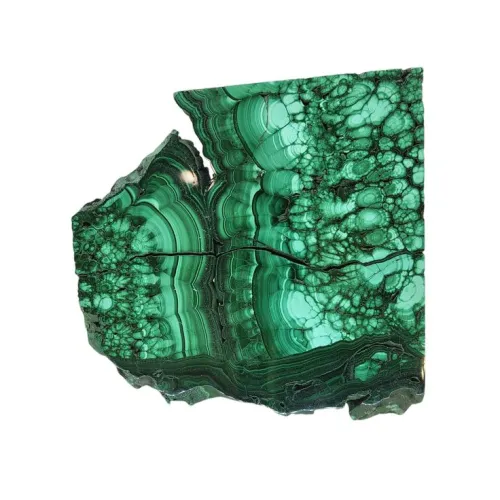
Some believe malachite's hypnotic swirls "entice money energy," citing its resemblance to eyes or galaxies. This idea persists because swirling patterns feel symbolically "active" while deep greens evoke growth metaphors. In crystal shops, vendors deliberately spotlight stones resembling currency symbols. The perceived "dance" of light across bands reinforces ideas of kinetic financial energies.
Technically speaking, malachite's concentric bands are geological records: alternating light/dark layers document mineral deposition cycles during formation. The patterns may appear dynamic but result from static, slow-growing crystal aggregates. Scientifically, the banding merely indicates varying concentrations of copper carbonate deposition - not cosmic money magnets. The silky luster comes from fibrous crystal structure alignment during polishing, not intrinsic energetic signatures.
When examining malachite jewelry or decorative objects, admire the banding as natural artistry. Notice whether claims focus on observable properties like band regularity or invent metaphorical interpretations. Ask sellers: "How does band formation scientifically differ from metaphysical interpretations?" Let the patterns remind you that nature's artistry needs no supernatural justification.
Frequent online assertions suggest malachite "conducts prosperity frequencies" due to its copper content. This myth endures because copper conducts electricity well physically, leading to metaphorical leaps about "energy conduction". Yet mineral conductivity remains unrelated to financial outcomes - a confusion of scientific terms.
The clearer perspective examines verifiable traits: With only 3.5-4 hardness on Mohs scale, malachite scratches easily. Containing carbonate makes it react slightly with acids and sensitive to rapid temperature changes. Specific gravity between 3.6-4.0 gives it substantial heft. These properties suggest fragility requiring protection - not perpetual energy emission. Thermal sensitivity explains why jewelry may crack if moved from cold car to warm house environments, contradicting "eternal vibrancy" claims. Copper's conductivity relates purely to electrons, not abstract abundance concepts.
Before purchasing malachite, test it against reality: Hold it - does the weight feel materially tangible rather than mysteriously "energized"? Inspect hardness by gently pressing (but not scratching) with fingernail. Notice whether sellers discuss care instructions acknowledging physical needs versus mystical promises.
Myths sometimes claim that "Congo malachite holds stronger money properties" due to abundant deposits. This ignores how every deposit originates similarly: copper ore deposits undergo chemical weathering near Earth's surface over millennia. Malachite forms identically whether in Russia's Ural Mountains, American Southwest, or Australia - identical chemical processes producing comparable minerals worldwide.
Malachite occurs exclusively as a secondary mineral in copper deposits through water-oxygen reactions altering primary minerals like chalcopyrite. Major deposits associate with azurite or chrysocolla near exposed copper veins. These geological facts are verifiable: Collectors can observe transitional zones showing malachite replacing other minerals. Unlike supernatural claims requiring faith, mineral formation follows replicable chemical pathways observable through x-ray diffraction and polarized microscopy.
When encountering geographic claims about specific deposits, ask about geological similarities between regions rather than mythical differences. Before purchasing certified specimens, request locality documentation showing actual origin rather than marketing tales. Let the stone’s global distribution demonstrate nature’s indifference to human-drawn political/economic boundaries.
Modern metaphysical stores often frame malachite as ancient "manifestation tools," ignoring historical artifacts showing utilitarian applications. Ancient Egyptians used malachite powder as pigment - the famous green in tomb paintings - not wealth generators. Renaissance artists similarly ground malachite for paint, valued for color stability rather than superstitions.
What verifiable history reveals: Malachite functioned as ore indicator revealing subsurface copper deposits essential for tool/coin production. Its use in Roman jewelry showcased craftsmanship, not supernatural expectations. Today’s resin-stabilized decorative bowls extend this practical tradition: artisans enhance structural stability for durability matching modern aesthetic needs. The shift from paint pigment to conversation-starting jewelry reflects changing craftsmanship applications - not uncovered mystical powers.
When appreciating malachite craftsmanship, separate artisan skill from attributed powers. Consider historical context: Does the piece continue practical traditions like ornamental carving? Ask craftspeople about technical challenges - stabilizing fragile sections with resin, polishing uneven hardness. Value human ingenuity over imagined energies.
Sellers occasionally claim malachite "self-charges" or "requires no maintenance" despite scientific vulnerabilities. Such claims ignore its porous structure developing patinas from skin acids or oils. This contradiction arises when metaphysical narratives override geological facts for marketability.
Proper handling acknowledges physical traits: Since malachite may fade under prolonged sunlight exposure due to UV sensitivity, display away from direct sun. Its 3.5-4 hardness demands separate storage from harder minerals like quartz (7 hardness) preventing abrasive damage. Thermal protection prevents cracking in temperature fluctuations. These scientifically grounded practices reveal the stone as requiring human care - not autonomously attracting financial outcomes. Natural patina development through handling demonstrates surface chemical reactions unrelated to energy accumulation.
Protect your stone practically: Store malachite separately in soft fabric pouches. Clean only with dry microfiber cloths avoiding water and chemicals. Notice whether instructions emphasize preservation versus claims about "enhancing energies." Such care reflects respect for nature’s genuine properties.
A shopper might feel genuine calm holding malachite, interpreting this as "financial stress reduction." While subjective experiences remain valid, marketing often misattributes this to stone properties rather than personal meaning-making. This confusion grows when vendors present geological facts mixed with energy claims without clear distinction.
Objectively, malachite’s weak diamagnetic properties show negligible magnetic interactions - unlike magnets physically attracting objects, it cannot draw wealth. Psychological responses to its vivid green may temporarily alter mood states - comparable reactions emerge viewing green forests or paintings. This separates subjective experience from objective mineral properties. While stabilized resin enhancements prevent breakage, they don’t generate metaphysical "abundance fields." Personal experiences deserve respect but warrant different language than mineral science.
Separate your experiences from marketing claims. If malachite provides meditation focus or decorative joy, honor that without adopting unsupported economic promises. Ask sellers to distinguish psychological impacts ("many find green calming") from physical properties ("measured specific gravity"): This highlights accountability gaps. Admire your stone for what it verifiably presents - captivating colors and patterns - while building finances through human systems.
Next time you’re browsing crystals or reading online claims, pause. Recall malachite’s actual properties - banded patterns revealing geological history, 3.5-4 Mohs hardness requiring careful handling, copper’s scientifically confirmed conductivity versus imagined "manifestation frequencies." Ask yourself: Does this narrative respect the mineral’s verifiable traits? Does it acknowledge human belief systems without conflating them with immutable laws?
Q: Why does polished malachite look more "energetic"?
A: Luster enhancement through polishing reflects light more efficiently and may reveal banding patterns previously obscured by rough surfaces. These visual changes result from mechanical modification rather than altered intrinsic properties.
Q: Can businesses display malachite for branding?
A: Historically, Russian malachite rooms projected opulence - a tradition modern companies may reference. The visual impression of rich greens may shape consumer perception similar to other design elements, separate from unproven money attraction effects.
Q: Why is malachite sometimes paired with metals?
A: Jewelry settings provide crucial physical support for this softer mineral while offering design flexibility. Silver accents may visually complement its green hues through intentional aesthetics rather than claimed energetic synergies.


$
