Malachite requires gentle handling due to its softness and environmental sensitivity; its vibrant bands stay protected through bezel settings, dry cleaning, and avoiding acids or harsh light - remember these core principles to maintain its vivid character.
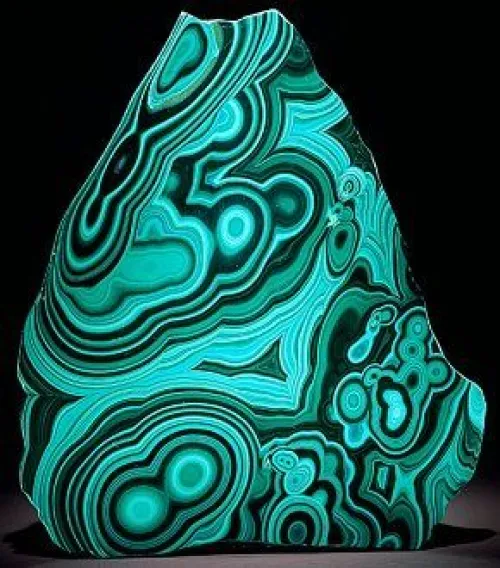
Imagine browsing a jewelry store when swirling green patterns catch your eye. The salesperson mentions it's malachite, but warns "it needs special care" - leaving you wondering what exactly that means. Later online, you find conflicting advice about cleaning methods, some suggesting oils while others insist on water avoidance. This confusion around **how to use a malachite crystal** effectively is typical. Like your jewelry store experience, people encounter fragmented information about its use in decor, jewelry, or collections without clear guidelines for daily interactions. We'll unpack common claims about its durability, cleaning rituals, and safe display by connecting them to verifiable properties like Mohs hardness or chemical reactions. By matching real-world scenarios to mineral characteristics, you'll develop your own checklist for practical malachite use.
Picture unpacking a malachite paperweight ordered online. Its substantial weight and cool smooth surface suggest solid durability, making you assume it belongs with tougher stones like quartz on your desk. This common perception arises because we equate density with hardness. Marketing descriptions like "semi-precious stone" unintentionally reinforce this, while its polished surface resembles more resilient minerals.
The clearer way to see it is: Malachite forms through copper-rich water depositing carbonate layers over centuries. Chemically defined as copper carbonate hydroxide (Cu₂CO₃(OH)₂), this composition creates what mineralogists call a "soft gem" material. Its Mohs hardness rating tends to range between 3.5-4 - softer than everyday materials like glass (5.5) or steel nails (6.5). Density measurements averaging 3.9-4.1 g/cm³ contribute to its deceptive weightiness, independent of impact resistance.
When choosing pieces for daily use, run this simple test: Gently tap a fingernail against the surface as you tap glass too. The softer scratch resistance of malachite compared becomes obvious, indicating specialized display approaches. Remember that substantial weight doesn't imply toughness with minerals - always verify the Mohs scale rating before assuming placement requirements.
A friend once proudly showed their malachite pendant saying "See how deep these swirls go? That proves quality!" pointing at hypnotic concentric patterns. Such intuitive judgments stem from naturally associating intricate patterns with structural depth. Retailers emphasize "banded beauty" without clarifying how these visual textures guide practical interaction.
Technically, those signature green swirls come from layered crystal deposits during formation. Band thickness variations directly reflect mineral deposition rates rather than structural integrity considerations. While the distinct banded appearance provides important identification markers, textured surfaces can actually present preservation challenges. Natural rough areas may trap dust, while high-polish sections lose their sheen when contacted by abrasive materials.
Examine pieces in shops using oblique lighting: Angle it to see light diffusion properties create depth illusions before checking surface texture with fingertips lightly. Prioritize smoothly polished sections for jewelry contact points when possible, but recognize those beautiful bands reveal geological history more than practical resilience. Their complexity increases cleaning complexity - a trade-off between aesthetics and maintenance reality.
Imagine receiving your first malachite carving. Excitement tempts you to immediately handle its intriguing patterns, unaware that finger oils start subtle surface changes. Everyday intuition suggests personal touch bonds us with objects, while unboxing routines often include water cleaning for ceramics or glass. But this conflicts with malachite’s physical reality.
In reality, initial handling establishes protection baseline protocols. Proper preparation begins using microfibre cloths for gentle residue removal without liquids, minimizing water exposure from the start. Physical characteristics including high thermal conductivity cause quick heat absorption from hands, expanding microscopic moisture absorption points. Surface polish integrity maintenance relies on consistent minimized skin contact rather than ritualistic touching.
When unwrapping new malachite, emulate museum conservation habits: Wear cotton gloves during initial inspection, observing patterns visually before physical interaction. Establish "rest days" between handling sessions if using decorative pieces regularly, letting surfaces recover. Remember the initial 48-hour integration period significantly influences long-term appearance preservation.
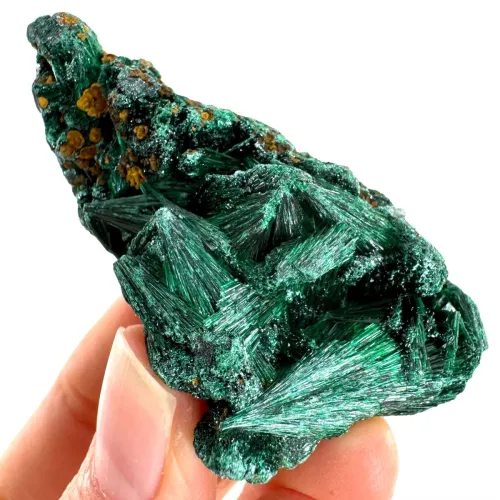
You're arranging bookshelves and want to feature that stunning malachite sphere. Instinct places it near the window for natural light enhancement - after all, sunlight showcases other collectibles beautifully. Similarly, jewelry choices gravitate toward rings and bracelets where we can admire stones while working. Neither approach matches the mineral's needs.
The safer integration approach considers environmental factors systematically. Indoor display surfaces such as wooden shelves or fabric-lined tables create viable foundations because they cushion and minimize thermal transfer compared to metal or stone. Jewelry integration becomes practical mainly through protective bezel settings shielding banded patterns from abrasion during movement. Compact palm-sized specimens often maintain integrity better larger counterparts for desk placements.
Try positioning trial placements away from afternoon sun hotspots while watching for fading over weeks. Notice how indirect lighting reveals banding with minimal thermal change versus direct beams. For wearable pieces, choose earrings or pendants experiencing less impact than rings when possible. Each space requires evaluating humidity consistency through seasons - simple hygrometers help monitor this invisible factor near display areas.
Consider Sarah, who diligently cleans her malachite bowl monthly with specialty crystal sprays until swirling bands become cloudy. Like many, she equates frequency with care, applying solutions proven safe on harder surfaces. The stones surface slowly develops micro-abrasions trapping residues where liquid solutions are applied.
Effective maintenance protocols align with material science rather than cleaning traditions. Preservation reliability comes from dry dusting performed weekly using soft makeup brushes to maintain luster without liquids. Environmental stability requires monitoring humidity levels consistently since relative humidity above 65% causes instability over time. Storage recommendations prioritize individual pouches preventing scratches from harder mineral items stored nearby.
Create your care schedule by observing placement conditions: Sun-facing spots need twice-weekly light dusting versus monthly elsewhere. Test humidity conditions by placing silica packets near display zones seasonally. Notice how porous pouch liners control moisture better than plastic containers. Matching routines to environmental parameters proves more effective than generic calendar-based methods.
Gallery exhibits often pair malachite slices dramatically with polished metal stands, suggesting contrast maximization. We internalize this "more is more" approach, overlooking scientific partnerships balancing preservation with presentation. Meanwhile, souvenir sellers reference historical transformation symbolism unrelated to practical usability.
Practical pairing possibilities emphasize complementary materials reducing micro-abrasions. Wood bases create safer contrasts than metal while cushioning vibrations from household activities. Though ancient Egyptian miners connected band patterns with transformation metaphors, modern applications focus on physical properties: Light diffusion qualities help designers use oblique lighting for dimensional enhancement without ultraviolet exposure.
When creating displays, think friction coefficients: Felt pads between malachite and contrasting surfaces prevent scratches. Test lighting angles with handheld lamps before permanent installations, avoiding full-spectrum bulbs. Remember decorative combinations should elevate both beauty and preservation potential - not merely create visual drama.
Your kitchen windowsill seems perfect for small minerals - until lemon juice splashes near your malachite sample. Common assumptions equate household safety with mineral safety, overlooking chemical reactions possible in domestic spaces. Similarly, humidifiers benefit humans without considering geological impacts nearby collections.
Extended wear applications require specialized awareness. Potential reactivity with acidic substances like vinegar or citrus demands separation from food preparation areas, while bathroom steam introduces humidity fluctuations threatening structural stability. Thermal conductivity measurements showing rapid heat absorption mean indoor lighting choices require evaluation for surface warmth during prolonged exposure.
Perform simple environment mapping: List activities happening within 10 feet of display areas - cooking vapors require different containment than home office settings. When wearing accessories longer periods, check for abrasion signs near clasps using magnification mid-day rather than waiting until cleaning days. Proactive environmental scanning prevents ninety percent of specialized scenario issues.
A common and important question is: Is malachite poisonous? From a mineralogical perspective, solid, intact malachite (copper carbonate hydroxide) is not toxic through skin contact when worn. However, the risk lies in improper handling. Malachite dust can be harmful if inhaled, and fragments/powder are toxic if ingested due to their copper content. More critically, its reaction with liquids raises the question: is malachite toxic in water, and why? The potential toxicity risk does not stem from "water being toxic," but from its chemical nature. As a carbonate mineral, malachite can undergo a slow chemical reaction during prolonged soaking or contact with acidic liquids (including weakly acidic rainwater or sweat), potentially leading to the release of trace copper ions. Therefore, the core safety principle is: avoid creating dust (use professional protection when grinding), never use it to make containers for beverages (like cups, bowls), and strictly adhere to dry cleaning methods to fundamentally avoid any situation that could trigger chemical decomposition.
Notice how maintenance shifts from chore to preservation science when aligned with material properties. Checking humidity levels whenever weather changes mirrors checking umbrella needs before going out - both become intuitive preventive habits. In many crystal practices, people ask how to activate malachite. From a mineralogical preservation perspective, the most effective “activation” is not a ritual, but this very process of mindful integration: the intentional preparation (dry cleaning, proper placement) and consistent, knowledgeable care that “activates” its long-term stability and beauty in your environment. Each choice balances enjoyment with conservation.
Now when admiring green banded pieces, you'll notice protective bezel settings instead of just beauty. Handling rituals become intentional preservation acts informed by carbonate mineral science rather than superstitious rites. Remember this practical synergy: Its visual signature emerges from geological vulnerability requiring human awareness for longevity. When arranging displays, consider placement as environmental mediation - strategic distances from windows protect color integrity while fabric buffers prevent surface abrasions.
Q: Can malachite tolerate occasional water exposure?
A: Occasional water exposure might not cause immediate damage if thoroughly dried after, but repeated moisture exposure tends to degrade carbonate minerals over time. For preservation reliability, consistent dry cleaning methods prove safer through demonstrated stability patterns. Importantly, as discussed in the safety section, minimizing water contact also mitigates any potential risk of copper ion release.
Q: How does malachite's softness compare to other stones?
A: Malachite can be significantly softer than popular jewelry materials - it ranks closer to amber (2-2.5 Mohs) than quartz (7 Mohs). This relative softness is why minimal skin contact protocols help preserve polished surfaces better than harder minerals typically require.
Q: Can I restore faded color?
A: Color changes from light exposure typically represent permanent molecular alterations. Prevention through avoiding direct light can maintain vibrancy more effectively than any documented restoration methods for green coloration integrity.
Q: Are there safer alternatives for ring stones?
A: Pendants and earrings create lower-risk wearing experiences as accessories due to reduced exposure to physical impacts or friction surfaces compared to rings, which tend to experience accelerated material wear during routine hand usage.
Q: Is it safe to wear malachite jewelry daily?
A: Safety for daily wear depends on the piece's setting and your activities. Well-protected bezel settings in pendants or earrings are generally safe. The primary concerns are physical abrasion due to its softness and minimizing prolonged exposure to sweat (a mild acid). Ensure the stone is securely set to avoid chipping, and remove jewelry during manual work, exercise, or bathing to preserve both the stone and your safety.


$
