The straightforward takeaway: Malachite is a visually striking mineral with cultural significance and geological intrigue, but there's no scientific evidence that it offers physical or metaphysical protection. If you remember one thing, let it be this: Its real value lies in its vivid green beauty and ancient craftsmanship traditions – not protective properties.
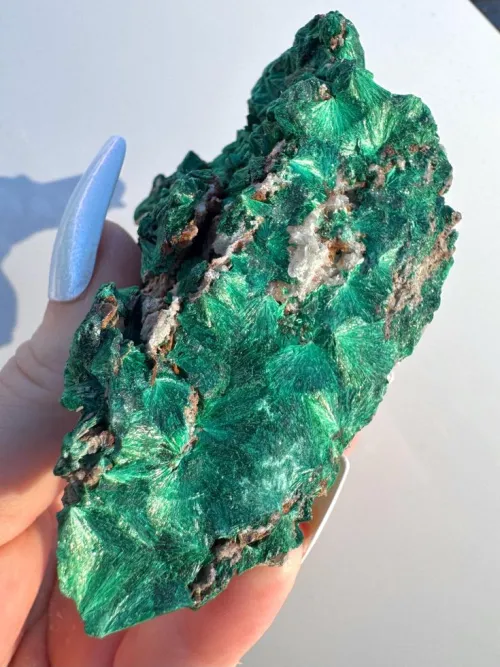
Imagine browsing a bustling crystal shop while a seller whispers how malachite shields wearers from "negative energies." Later, scrolling online, you spot claims of malachite amulets warding off physical dangers. Such myths swirl through metaphysical stores, social media, and jewelry listings – often blending cultural folklore with pseudo-scientific terms like "energy shield" or "protection stone." It’s enough to make anyone wonder: Could a green rock actually protect you? We’ll untangle the romance from reality by digging into verifiable mineral traits – from copper-infused chemistry to its formation in ancient mines – so you can spot fact vs. fiction when encountering malachite claims.
Walk into any jewelry store with malachite pieces, and you might hear phrases like "stone of transformation" or "guardian against harm." These associations appear everywhere – from Instagram crystal influencers to descriptions in gemstone catalogs. The appeal makes psychological sense: our brains instinctively link deep green hues with growth or safety, while banded patterns feel like natural shields. Combine this with the mystery of ancient Egyptian artifacts, and protection narratives take root easily. Modern marketing language (like "absorbs negativity") then reinforces the idea.
In reality, malachite’s only scientifically verifiable "protective" trait relates to handling precautions. The technical_features confirm malachite can be sensitive: Exposure to acids or harsh chemicals may damage its surface over time, meaning it technically needs protection itself. The mineral's reputation for guarding humans? That likely came from early artisans. When miners encountered vibrant malachite above copper ores, they assumed the green crust shielded or marked valuable deposits. Practical utility – not mystical barriers.
How to see past the hype: Next time you hear "protective malachite," swap abstract terms for tangible qualities. Note if sellers emphasize: • Verifiable mineral care (like avoiding abrasives) • Historical context over unspecific "energy" promises • Visual features you can examine yourself – banding contrast, polish quality, bezel settings for jewelry
A friend once told you: "Malachite contains copper, so it must conduct good energies!" People echo this logic worldwide – copper gets credit for everything from antibacterial properties to spiritual conductivity. But scientific analysis paints another picture. Malachite's technical_features show it's copper carbonate hydroxide, not pure copper. This structure behaves differently, just as table salt (sodium chloride) doesn't act like explosive pure sodium. The copper bonds tightly in malachite's crystalline structure, preventing interaction unless chemically altered.
The clearer way to see it: Malachite typically ranks between 3.5 and 4 on the Mohs hardness scale – slightly harder than fingernails but softer than glass. That's why experienced jewelers set malachite in protective bezels to prevent chipping. Its specific gravity ranges from 3.6 to 4.0 (you’d notice its weight if held). These measurable traits hint at its actual resilience: substantial enough for carvings but vulnerable to pressure or impacts.
Your practical take: Instead of believing copper "vibrations," test malachite's actual material behavior: 1. Weight check: Compared to similar-sized stones, it feels surprisingly dense 2. Temperature test: Like most minerals, malachite initially feels cool against skin but warms to body heat 3. Setting inspection: Quality jewelry encloses edges in metal, a practical sign of its vulnerability
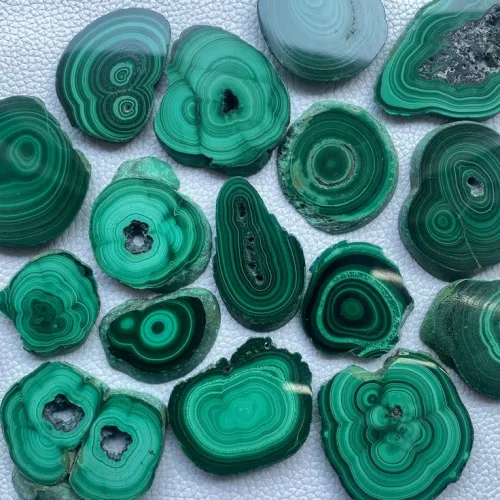
Picture this: You unbox a malachite bracelet, captivated by whorls of emerald and forest green. The velvety texture makes it feel ancient and powerful. Such sensory experiences fuel protection lore – surely something this unique "does" something? In fact, malachite's visual drama stems from its banding patterns (called concentric rings), formed through slow mineral deposition in copper-rich solutions. When polished, this creates a silky to vitreous luster. Yet these captivating features correlate to fragility, not force fields: intricate banding means variance in hardness across the stone, creating natural cleavage points.
Technically speaking, prolonged light exposure can darken or fade malachite's vivid greens. Dust particles can scratch its surface – hence the cleaning recommendation for gentle wiping with a soft, damp cloth. While holding malachite may feel soothing, that’s likely tactile psychology: studies show cool, smooth surfaces lower stress. Yet the technical_features repeatedly emphasize it's valued for aesthetic appeal, not barriers against threats.
Hands-on wisdom: Judge malachite by its tangible traits: • Examine banding patterns under light – intricate circles are geological records, not force fields • Run your finger over polished pieces: minor surface variations signal natural origin • Note luster depth: Authentic pieces show glassy brightness without cloudiness
Imagine ancient Egyptian miners chiseling malachite in 4000 BCE, grinding it for eye-catching green pigment. Throughout history – Russian palaces, Congolese carvers, Victorian cameos – humans cherished malachite. Cultural traditions naturally spun symbolic meanings: transformation due to how it caps weathered copper ores, or rebirth parallels in its rings (like tree trunks). These interpretations got misread as "protection" over centuries. Modern metaphysical shops retell these stories as literal powers.
In reality, major deposits form through weathering processes in copper-rich environments like the Democratic Republic of Congo. Malachite is essentially geological evidence – chemical remnants after water and air react with copper minerals. That impressive banding? Variations in temperature and mineral concentration during formation. While ancient peoples valued it for art and trade, scientific testing reveals no electromagnetic fields, radiation-blocking, or structural properties that could physically shield wearers.
Dig deeper: When a salesperson mentions malachite's "ancient protective uses," ask yourself: • Do they cite museums, mineralogy studies, or cultural anthropology? • Is the protection claim tied to demonstrable physical properties? • Could cultural metaphors be misinterpreted as functional promises?
You’re at a flea market admiring malachite earrings while another shopper murmurs about "energetic armor." Historically, its use was purely ornamental: decorative boxes, Roman floor tiles, or Renaissance pigments. Malachite can be carved into sculptures because it’s relatively stable indoors, but significant geological_formations like stalactites require careful preservation. Even jewelry demands practical safeguards: most pieces incorporate closed-back settings so skin oils won’t penetrate porous sections, and avoid direct contact with lotions or alcohol.
The accurate perspective: Malachite maintenance has clear, chemistry-based protocols requiring neither rituals nor faith. Harsh cleaners, prolonged sunlight, or impacts pose tangible risks – unlike mythical "energy drains." While it carries fascinating heritage (think Cleopatra’s kohl eyeliner), its role was decorative transformation, not force fields. Value comes from craftsmanship: precisely cut pieces highlight nature’s artistry without demanding supernatural benefits.
Smart appreciation: Appraise malachite as artisans do: • Inspect settings: Bezel or enclosed backs indicate material vulnerability • Avoid water immersion: Even durable stones need care • Store properly: Wrapped separately to prevent scratches from harder gems
Q: Can wearing malachite improve luck or safety?
A: Cultural traditions associate symbols like malachite with transformation or prosperity, but no mineral has intrinsic "luck properties." Enjoy it for aesthetics and history, not guaranteed outcomes.
Q: Why does malachite sometimes turn darker or lighter?
A: Oxidation processes and light exposure may gradually alter its surface hue. Stable storage away from UV light tends to preserve coloration.
Return to that crystal shop or online listing with fresh eyes. Notice whether descriptions emphasize measurable qualities like banding patterns or luster rather than vague claims. Test your observational skills: How well do jewelry settings guard fragile edges? What details hint at geological origins versus magical promises? By grounding judgment in mineral science – formation, hardness, reactivity – you trade mystery for meaningful appreciation. The real protection malachite offers? Safeguarding your judgment against unverified assertions. When future malachite moments arise, pause and ask: What story does its banding actually tell me?


$
