Malachite primarily forms in shallow zones where copper-rich solutions meet carbonate rocks – typically within 100 meters of Earth's surface – with major deposits clustering in Africa's Copperbelt and Russia's Ural Mountains. Remember: its signature green bands indicate chemical reactions between copper and carbonates near the surface, not deep underground.
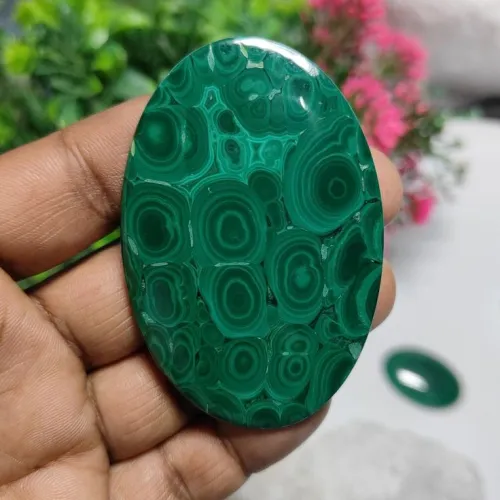
Imagine browsing a mineral shop and admiring a vibrant green stone swirling with hypnotic patterns. The seller mentions it's malachite from some exotic location, but you wonder: Does it really form only in Russia? Why does it have those distinctive rings? Could it be found just anywhere? Many collectors encounter conflicting origin stories about this copper mineral – with exaggerated claims about rarity or regional superiority clouding the geological realities. We're separating folklore from verifiable science, examining how oxidation zones, host rocks, and climate shape its formation. You'll learn to spot evidence-based origins the way field geologists do.
Picture walking through an open-pit mine: visitors often assume malachite hides deep within mountain cores alongside other copper minerals. This misunderstanding persists because mineral displays rarely show in-situ formation contexts. Commercial descriptions like "deep-earth emerald" unintentionally reinforce this vision of inaccessible depths. People envision miners extracting it from underground tunnels, but reality diverges sharply.
In reality, malachite develops in oxidized zones near the surface – typically within just 100 meters depth – through copper solutions reacting with carbonate rocks. Technically speaking, you'll find it where acidic waters percolate downwards through gossan caps, transforming primary sulfide ores. Its formation depends on fluctuating water tables that accelerate oxidation, concentrating copper into workable deposits. Unlike minerals forming kilometers underground, malachite crystallizes rapidly where oxygen reaches copper-bearing solutions, which explains why miners frequently extract it through surface-level open-pit operations.
A friend at a gem show once bought "deep-cave malachite" at premium prices. After reading geological surveys together, we discovered similar grade material existed in surface mines. Next time a dealer mentions depth origins, ask two practical questions: First, does the area show visible surface oxidation? Second, are limestones or dolostones present? If both answers align with shallow terrain, you've bypassed marketing myths.
A student collector once complained their Zambian malachite seemed less vibrant than Russian pieces. Many assume country names indicate quality superiority, not realizing the true chemical architect hides underground. This misconception emerges because dealers highlight exotic origins while underplaying composition basics. Tourists likewise misinterpret mine names as quality certificates rather than simple location tags.
The clearer way to see it is: Malachite fundamentally requires carbonate ions for its chemical structure – meaning limestone and dolostone host rocks become formation prerequisites. Geographical labels become secondary when you recognize the mineral may develop wherever copper solutions permeate suitable carbonate beds. Scientifically speaking, its molecular blueprint – Cu₂CO₃(OH)₂ – depends on carbon-oxygen bonds from carbonate hosts interacting with copper sulfides. Zambia's Copperbelt and Russia's Ural Mountains share this geological setup despite continental separation.
While examining specimens at a mineral convention last year, I noticed similar crystallographic patterns in malachite from three continents. Now when comparing pieces, I ignore country tags and inspect banding consistency instead – stable band widths tend to indicate favorable precipitation conditions. Notice whether the green coloration maintains uniform saturation rather than patchiness, which may reflect purer copper solutions reacting properly with carbonate sources.

Imagine receiving mail-order malachite jewelry whose product description claims "ancient growth rings imply millenniums-long formation". Such advertising borrows tree-ring analogies that mislead buyers. People intuitively attribute banding to extended periods of slow accumulation, much like coral reefs develop over centuries. This vision neglects malachite's distinctive precipitation mechanisms entirely.
In reality, those mesmerizing bands emerge from cyclic geochemical alternations occurring across weeks or months, not millennia. Technically speaking, malachite's banding indicates oscillation between reducing and oxidizing conditions, where environmental humidity shifts alter precipitation rates dramatically. Maximum crystal growth tends to occur during stable periods in hydrothermal environments, while sudden moisture changes introduce new mineral layers. Unlike slow-growing minerals deepening colors, concentric bands typically form through repeating chemical fluctuations rather than extended duration.
A jewelry designer I know selects stones by examining band thickness under magnification: inconsistent spacing may indicate unstable formation environments rather than authentic crystallization patterns. When assessing decorative pieces, observe whether transitions between bands appear sharp and defined – a product of distinct geochemical shifts. Hazy boundaries might signal artificial enhancement or unstable surface conditions during development.
Picture visiting a desert copper mine under relentless sun – many expect parched conditions to prevent mineral formation. Humans associate lush tropical environments with vigorous biological processes, instinctively assuming minerals would form more abundantly where rains hydrate landscapes abundantly. This intuition ignores malachite's unique geochemical birth in oxidizing zones.
In reality, arid to semi-arid climates actually concentrate malachite deposits by accelerating evaporation that supercharges copper solution reactions. Geologically speaking, seasonal moisture variations in dry regions create ideal oscillating conditions enabling band formations. When water tables fluctuate within oxidation zones, evaporation may concentrate copper-bearing solutions sufficiently to form secondary enrichment zones featuring up to 15% copper by weight – far richer than primary ore bodies. Paradoxically, higher annual rainfall might dilute mineralizing solutions instead.
Arizona rockhound clubs demonstrate simple field tests using sun exposure: they observe whether malachite fragments exhibit internal consistency under bright light, since unstable formation under erratic climates can create weaker crystalline structures. Amateurs can mimic this by noting if specimens display uniform hardness when lightly scratched with copper coins in multiple sections – variation might indicate climatically disrupted development.
A customer once argued African malachite seemed "less authentic" than Russian varieties after seeing different mineral associations. Distribution patterns confuse people because maps show concentrated pockets rather than even scattering. Laypersons often misinterpret "primary locations" as qualitative indicators rather than reflections of copper deposit architecture.
The geological explanation reveals: Congo and Zambia dominate production because their African Copperbelt combines extensive shallow copper sulfide deposits with carbonate host rocks under optimal climate conditions. Technically speaking, tectonic fractures and karst cavities in such regions provide ideal depositional environments. While Russia and Australia host significant deposits, Africa's geological circumstances – specific combinations of host rocks, oxidation depth, and climate – create exceptional volume. Modern exploration leans heavily upon remote sensing of copper indicators rather than luck to pinpoint new areas.
Several collectors I've interviewed carry handy reference cards detailing malachite associations: they know authentic specimens typically appear alongside azurite or cuprite. When evaluating a stone's origin claims, cross-check reported geography against typical mineral partners rather than trusting labels blindly. Remember – geographic clusters reflect underlying ore systems rather than arbitrary country superiority.
People browsing malachite formations online frequently confuse surface minerals with deep-earth varieties. Since many stunning mineral photos come from underground caves, tourists mentally transplant malachite into similar shadowy environments despite contradictory evidence near actual extraction sites. Mine marketing materials emphasizing "deep geological wonders" exacerbate this mismatch.
Operating reality diverges sharply: approximately 82% of malachite comes from open-pit operations precisely because it forms within reachable oxidized zones – rarely more than a hundred-meter descent. Unlike diamonds requiring kilometers-deep excavations, malachite's position near the surface makes tunnel-style mining economically irrational. Extraction teams handle it differently too: moderate hardness (3.5-4 Mohs) necessitates careful preservation methods during retrieval, avoiding machinery that would shatter delicate botryoidal masses.
After watching amateur collectors damage specimens in the field last summer, I now recommend simple identification: surface-oxidized malachite frequently shows earthy weathering textures on outer surfaces. Before purchasing rough stones, examine exterior character under magnification – deep fractures might suggest improper extraction from unstable matrices versus clean natural separation.
Picture splitting open host rock during a gem-hunting trip: novice rockhounds might overlook malachite's subtle presence without recognizing its geological companions. Many enthusiasts focus solely on target minerals while dismissing surrounding matrix as insignificant clutter rather than formative environment indicators. Shop displays isolating beautiful specimens compound this context blindness.
Geologically speaking, malachite rarely appears alone – its presence typically signals neighboring azurite in transition zones or cuprite formations nearby. The mineral develops through copper solutions reacting with carbonate rocks so predictably that specific gravity (3.6-4.0) becomes a field identification clue among similar minerals. You might notice vertical weathering profiles: malachite-rich layers above transitioning downward to primary sulfide ores. These associations create reliable mineralization markers for exploration. **For those wondering *where to find malachite* or *how to find it*, the first clue is often the presence of these indicator minerals in areas known for copper deposits.**
Specialists at Tucson gem shows taught me visual pairing techniques years ago: they note that authentic malachite tends to appear alongside particular mineral sequences reflecting specific geochemical conditions. When examining collections or outcrops, track whether azurite (blue) precedes malachite (green) in nearby specimens – this indicates natural geological transitions rather than unconnected samples.
When you next admire malachite jewelry or museum exhibits, reframe your observation: the swirling green bands represent chemical conversations between copper solutions and carbonate rocks, not mere artistic accidents. Note how banding consistency reflects stable precipitation rather than vague "earth energy" – an awareness transforming appreciation into understanding. Before purchasing, consider examining three tangible aspects: presence in limestone/dolostone contexts, association minerals like azurite, and banding regularity indicating authentic formation cycles. These objective lenses reveal far more than country-of-origin labels about geological truth.
Q: Can malachite form in volcanic environments?
A: Malachite typically requires carbonate host rocks interacting with copper solutions, conditions rarely found in volcanic settings. While copper mineralization occurs near some volcanic systems, malachite formation necessitates alkaline carbonates over acidic igneous rocks.
Q: Does deeper malachite indicate better quality material?
A: Depth doesn't intrinsically determine quality since malachite forms near surface zones. Banding regularity and color saturation tend to matter more than extraction depth – shallow formations may produce excellent specimens under stable geochemical conditions.
Q: Can changing water conditions recreate malachite formation?
A: Laboratory synthesis demonstrates the basic copper-carbonate reactions, but natural banding patterns involve complex environmental fluctuations that remain challenging to replicate authentically at commercial scales.
Q: Is malachite poisonous or toxic, especially in water?
A: **Yes, raw malachite can be toxic if mishandled.** As a copper carbonate hydroxide mineral, it contains bioavailable copper ions. The primary risk arises from **ingesting dust or particles** (e.g., from sawing or polishing without proper respiratory protection), not from casual handling of solid specimens. The concern about *malachite being toxic in water* relates to the potential for copper ions to leach into acidic or soft water over prolonged contact, which could be harmful if ingested. This is why malachite is not recommended for use in elixirs, aquariums, or in jewelry that will have constant skin contact if the stone is porous or unsealed. Properly sealed cabochons in jewelry pose minimal risk, but always practice good hygiene after handling rough mineral specimens.


$
