Malachite is primarily used as a decorative gemstone and ornamental material for jewelry, artworks, and architectural elements, leveraging its vibrant green banded patterns; remember, its moderate hardness means practical uses require careful physical handling to avoid damage, making it more suited for visual appreciation than daily wear. **A critical, often overlooked aspect is its composition: as a copper carbonate mineral, malachite should never be used in contact with food, drink, or placed in water for prolonged periods, as it can release toxic copper compounds.**
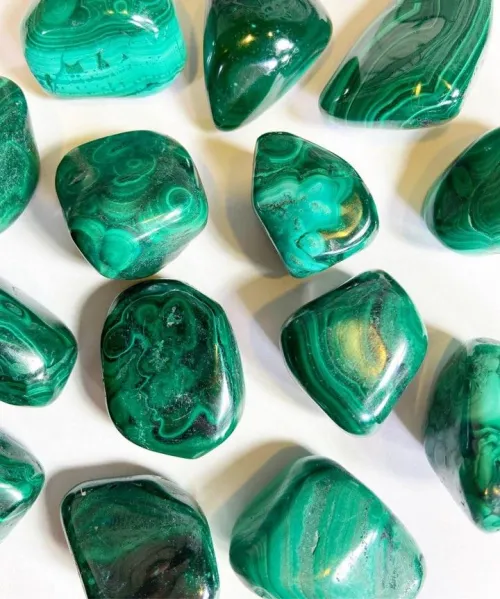
Picture yourself browsing a local minerals shop: you spot malachite jewelry glittering under lights, hear someone call it a "healing stone," and stumble upon conflicting claims about its durability. Stories float around—that piece your friend swore by for "protection," or that ornate vase online promising earthy elegance. It's easy to get tangled in myths: is it just for show or a practical choice? Or why do colors vary so much? This confusion stems from fuzzy marketing lingo and malachite's eye-catching looks that invite quick assumptions. That's exactly what we'll sort out here. We'll tackle every key puzzle—breaking down what people say versus the verifiable facts—using easy real-life snapshots. By the end, you'll know how to spot overstated claims and focus on tangible traits like layer patterns and density. Ready to demystify it step by step?
Visualize your friend excitedly unwrapping her latest purchase online—a malachite cabochon ring wrapped in velvet. She calls it the "ultimate decorative gem," claiming it lasts forever, while online ads might push it as "essential wellness aid." This hype stems from malachite's mesmerizing banded designs; marketers exploit its visual charm to spin all-purpose narratives. You'd hear buzzwords like "timeless treasure" in catalogs or overhear vague chats at craft fairs about versatility.
In reality, malachite mostly serves visual aesthetics versus practical or spiritual roles. Technically speaking, its layered patterns in shades of green create a natural artistry that appeals to jewelers and artists. Key features show it's perfect for crafted displays: malachite may be shaped into cabochons or beads for jewelry, focusing on ornamental appeal. Additionally, it can be used as a pigment in paints by grinding it into a fine powder, fitting artistic applications well. Its hardness ranges from 3.5 to 4 on the Mohs scale, making it less ideal for high-impact items but great for admiring eyes.
How to check this when shopping or wearing: Next time you touch a malachite piece in a store, gently ask the seller about its intended purpose. If someone labels it "multi-functional," scrutinize details like edge patterns and light reflections; genuine uses tie back to its banded layers and weighty feel. Avoid impulse buys—instead, recall that polishes enhance its beauty, not performance, so stick to items meant for stationary display or occasional wear, like pendants or figurines. **This strict decorative role is further underscored by its material properties, which we'll explore next.**
Imagine joining a gathering where collectors debate that malachite’s deep color guarantees durability like harder stones. Someone points to an online photo of cracked pieces, debating if it’s "natural" or fake. This misunderstanding arises because malachite’s rich hues and solid appearance in pictures can trick intuition; its name sounds exotic, hinting at sturdiness, while social feeds show flawless polished slabs.
Reality centers on malachite's fundamental make-up: it’s chemically defined as copper carbonate hydroxide, with banding from concentric layer deposition. This structure underlies how it should be handled: malachite’s density oscillates between 3.6 and 4.05 grams per cubic centimeter, giving a substantial feel but requiring protection. **This copper-based composition is precisely why malachite is considered toxic if ingested or if particles are inhaled.** More critically for everyday use, **malachite is toxic in water** because water can facilitate the release of copper ions from the stone. **The reason why malachite is toxic in water lies in its solubility; acidic or even slightly acidic conditions (which can occur with normal tap water or skin oils over time) can lead to the leaching of copper**, which is harmful if consumed. Environmental factors may cause degradation of malachite surfaces over time, especially if exposed to acids, heat, or moisture.
What this means for your choices: While examining a piece, focus on tactile clues first—run a clean nail along the surface; minimal grooves suggest a high Mohs rating, but always ask for specs. In conversations, steer toward facts: remind peers that density measurements are key differentiators. When storing or displaying, place malachite away from heat sources and **ensure it is kept dry and never used to hold liquids** to preserve the polish and prevent any material degradation or safety risk.
A friend of yours once showed off a malachite tabletop, marveling at "consistent" swirls that seem unreal under kitchen lighting. They might insist all malachite looks identical based on curated Instagram shots. Common confusion hits here because ring patterns vary wildly—some pieces appear almost opaque with bold bands; others might seem water-stained. Ads amplify this by editing photos to smooth imperfections.
The clearer way to see it is that malachite naturally exhibits semi-transparent to opaque textures with rings or swirls. This uniqueness defines its role: patterns dictate value and use cases. Polishing tends to create a smoother texture, reducing wear risks and highlighting its deep green contrast in mixed-material designs. Remember, malachite commonly appears with characteristic rings and swirls in green hues, so minor variations are normal and actually authentic.
Apply this in real life: When browsing online listings, cross-reference multiple angles of the same item; a genuine article shows irregular bands under different lights. If discussing with fellow enthusiasts, bring up how natural inconsistencies prove authenticity—unlike synthetic dupes that look "too perfect." For personal buys, prioritize items like inlaid boxes over rings where knocks might occur.

Notice how light catches those subtle layers? That’s your cue to assess pattern depth before purchasing.
Picture two shoppers arguing over local sourcing tags at a fair: one swears central African malachite is "stronger," while the other favors Russian stones for authenticity debates. Such theories swirl due to regional lore; copper-rich geology in areas like Russia and Central Africa contributes to formation. People misconnect origins to durability because travel documentaries or vendor claims imply location-based superiority.
Geologically speaking, malachite forms primarily in oxidation zones of copper deposits. Surface changes like patina may develop with prolonged exposure to air or moisture, influenced by environment rather than birthplace. Cost variability links more to pattern quality and size than origin directly. So, malachite sourced from copper-rich zones doesn’t inherently differ beyond aesthetics; focus on observable traits first. **Regardless of origin, its core chemical nature and associated care requirements (like keeping it dry) remain constant.**
How to read this correctly: Forget mystical "energy" chatter—instead, verify provenance via invoices or miner certifications to see factors like size affecting price. For care tips, store pieces in stable humidity **and always in a dry condition** to avoid degradation and prevent any potential issues related to its composition.
Envision helping a coworker choose a housewarming gift: they lean toward malachite coasters but hesitate over "healing" endorsements from reviews. These contradictions pop up as marketers blur lines; symbolic associations sometimes overshadow its real functions. Malachite tends to be valued in ornamental objects like vases for visual impact. **Crucially, a vase should be for dry flowers only, and coasters should have a protective sealant and never be used with wet glasses, given the stone's reactivity.**
What this looks like practically: Due to relative fragility and **its reactive composition**, opt for strictly decorative applications over utilitarian items to prevent chipping **and safety concerns**. Jewelry pieces such as beads can be chosen but recommend occasional wear with protective settings, **and they should be removed before washing hands or swimming**. Artists historically favored grinding malachite into pigments for paintings, though modern safety standards require caution with powdered forms.
In everyday decisions: Compare items with similar traits—e.g., malachite bookends might serve your colleague better than functional trays. Suggest they inspect joints and finishes; sturdy polish indicates lasting display potential. Remind them that malachite’s visual drama suits accent pieces, **not items in constant contact with skin moisture or liquids.**
Imagine overhearing café talk where malachite pendants are touted as "luck charms"—echoes of old tales of protection. That "ancient wisdom" lingers in gift-shop pamphlets, confusing buyers seeking tangible benefits. Cultural traditions have associated malachite with symbolic meanings, yet they distract from its craftsmanship roots **and, more importantly, from practical safety knowledge about its proper handling.**
Stick to facts: Malachite’s role centers on being a vibrant décor stone. Appreciate its artistry independently of legends. This way, you avoid overspending based on unfounded attributions **and ensure you use it safely.**
Practical tip: When encountering symbolic claims, ask sellers for physical evidence like mineral reports. Focus on the stone itself—band patterns and polish matter more than myths. **And always prioritize safety: decorative use means keeping it dry and away from ingestion risks.**
Picture a hobbyist puzzling over pricing discrepancies for similar-sized stones. Factors like pattern complexity and provenance affect cost; not all variations denote quality. **A non-negotiable factor that doesn’t affect price but dictates use is safety: understanding that malachite is poisonous if its dust is inhaled or if pieces are swallowed is fundamental. This is why cutters and carvers use protective gear, and finished pieces are for display and dry handling only.**
Key takeaway: Value is linked to visual uniqueness and surface integrity. Use a magnifier to inspect rings—consistent bands elevate appeal without extra myths. **Your safest and most rewarding approach is to admire its beauty visually, handle polished pieces with clean, dry hands, and display it proudly away from any scenario involving water, acids, or the possibility of ingestion.**
Remember three principles for clarity: Malachite's beauty is in its banded visuals, so trust signs like layered patterns over vague promises; its vulnerability means handle with care, prioritizing display items over daily tools; **and its composition demands respect—it is a stunning but reactive mineral that must be kept dry and never used in a way that could lead to ingestion.** Let this shift your perspective—the next time someone shares stories about that "magical green stone," listen politely but refocus on texture tests, weight checks, **and a firm understanding of its proper, safe context.** If you’re evaluating something online, pause before clicking “buy now”: mentally replay moments from this discussion. Glance back at color variations in images, feel for heft descriptions, and cross-verify specs against natural flaws. **Ask yourself: is this intended for a purely decorative, dry environment?** If this were your scene strolling through that minerals shop, what tangible characteristics would you scrutinize? Hold onto these anchors—soon, navigating malachite's world becomes less about guessing and more about grounded, informed judgment.
Q: Does malachite change color with age, and does that indicate its usage?
A: Malachite may develop a natural patina over time due to air exposure, but this doesn’t alter core uses; color shifts are physical reactions unrelated to functionality, and it generally remains fit for displays versus active wear.
Q: Are certain shades of green more valuable or versatile?
A: Vibrant, banded hues tend to elevate aesthetic value, but paler versions still serve similar ornamental roles effectively—focus on pattern clarity and polish intactness over exact shade.
Q: What’s the biggest upkeep mistake people make with malachite objects?
A: Exposing it to cleaning agents, rough surfaces, or **water** can scratch it **or lead to degradation**; stick to gentle dry dusting for jewelry or decor to minimize all degradation risks. **Never immerse it in liquid.**
Q: Is malachite toxic? Can I wear it safely?
A: **Malachite is toxic if ingested or if its dust is inhaled, due to its copper content.** For polished jewelry and decorative objects, the risk in normal handling is very low. The key safety rules are: 1) Do not wear malachite jewelry in water (swimming, showering), as this can degrade the stone and potentially release compounds. 2) Do not use it for items that contact food or drink. 3) Enjoy its beauty through dry, tactile appreciation and visual display.


$
