The short answer: Avoid oil treatments. While oil can temporarily enhance malachite's luster, its porous copper carbonate composition actually absorbs oils that may cause discoloration, trapped residues, or structural damage over time. The one rule to remember? Always preserve malachite's natural state through gentle dry care methods.
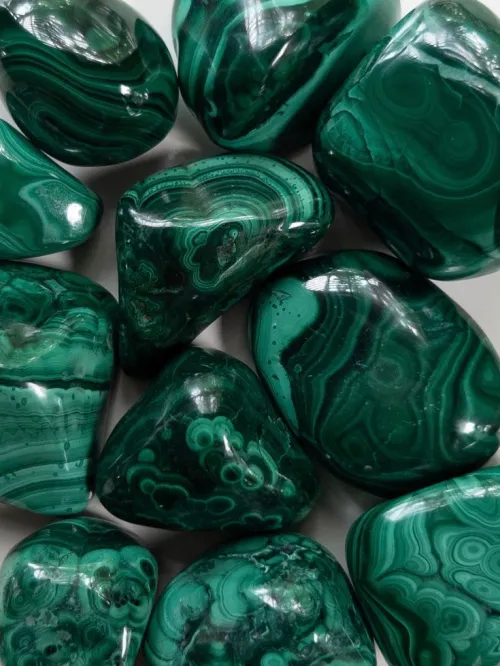
Picture yourself in a jewelry shop, watching as the owner passionately explains malachite care methods - one claims oiling preserves its green brilliance, another insists it's disastrous. Online searches yield similar contradictions, leaving you wondering who to trust. This confusion isn't surprising: mineral maintenance myths spread faster than facts, compounded by malachite's deceptive appearance that makes it seem "thirsty" for treatment. Let's untangle what actually happens at microscopic levels when oil meets malachite, moving beyond hearsay to observable evidence about how porous carbonates behave. By examining both immediate visual effects and long-term consequences, you'll gain clear benchmarks for protecting your specimen's natural beauty.
A friend admires their malachite ring, noticing slight dullness after months of wear. The logical assumption appears: "If leather shines with oil, why not stones?" This thought seems reinforced when oil creates instant surface shine. Retail environments further cement this impression—counter displays where treated stones temporarily glow under lights create "proof". But malachite isn't leather; its mineral reality involves more than surface needs.
Technically speaking, thin oil coatings initially boost luster through light refraction, temporarily smoothing microscopic surface imperfections. This creates an authentic immediate improvement that can appear beneficial. However, malachite's structure tends to respond differently than less porous gems due to its inherent physical characteristics.
Next time you consider treatments: pause and check. If lighting makes a stone appear wet, note whether that shine exists under normal room light. Remember that authentic mineral care starts by asking "What's beneath the surface?" not "What makes it shiny today?"
Imagine unboxing mineral specimens while wearing hand lotion—some remain unaffected, but malachite develops dull patches where fingers touched it. This reflects its copper carbonate hydroxide composition. Minerals have distinct chemical identities, just as vinegar reacts differently with baking soda than salt.
In reality, malachite contains copper that may react with acidic components in oils. While some stones remain inert, malachite can experience slow chemical alterations when exposed to oil compounds. Unlike surface-level treatments on non-carbonates, malachite tends to integrate oil molecules within its structure.
Picture water beading on a raincoat versus soaking into a sponge; malachite behaves like the latter. Variations in formation conditions create differently sized microscopic channels. What humans see as solid rock actually contains a network of tunnels.
Surface porosity allows liquids gradual entry into malachite's internal structure – oil doesn't just sit atop. Absorption depth depends on a specimen's particular porosity levels. Once inside, oils become difficult to remove through standard cleaning.
Before treatments: check your specimen's porosity. Place a water droplet on an inconspicuous area; if it disappears within minutes instead of beading, assume significant absorbency and avoid liquids.
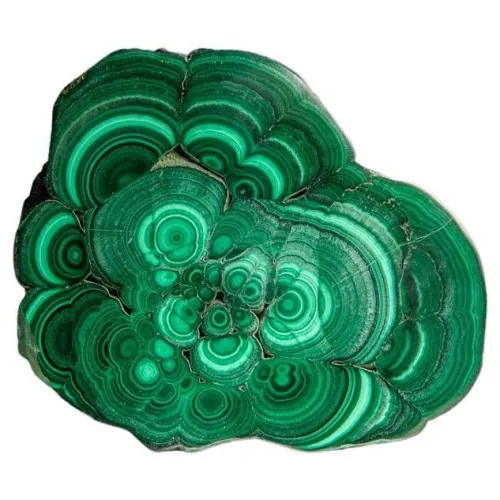
Use bright lighting and magnification to examine untreated sections—natural specimens show pitting or texture variations indicating absorption capacity. Higher porosity equals increased risk with liquids.
A colleague oils malachite bookends weekly, initially loving the deepened green. By month three, cloudy streaks appear within bands like spoiled milk. That beautiful darkening? It's the first stage of internal penetration before visual degradation.
Oil absorption can create uneven color saturation, diminishing malachite's signature banding contrasts. What begins as enhanced shine may turn into fingerprint-attracting stickiness. Natural optical properties give way to an artificially altered appearance.
Notice surface changes: genuine malachite maintains crisp banding edges under magnification. Oil-treated pieces increasingly show blurry transitions between color layers as moisture wicks through the structure.
Picture an heirloom malachite box with minor surface abrasions. Some might consider oil to disguise micro-scratches—an understandable approach for non-porous stones. With malachite, this attempt at aesthetic recovery can cause different problems.
While oil temporarily masks fine scratches through light refraction, malachite typically absorbs rather than holds surface coatings. The original imperfections remain, now hidden beneath residues that complicate future restoration. Unlike resins that form protective films, oils integrate unpredictably.
Instead of oil: display items in indirect light where minor flaws become less noticeable. Gentle buffing with museum-grade dry cloths may revive lustre without absorption risk.
A museum conservator handles malachite artifacts using gloves and microfiber cloths—zero liquids involved. Their preservation philosophy? Stabilize objects by respecting natural physical properties.
Maintenance starts with environmental control since humidity variations minimally affect untreated surfaces. Dusting with soft brushes retains original texture more reliably than liquid cleansers. These professional approaches focus on preventing degradation rather than correcting imagined problems.
When maintaining items: minimize handling with bare hands (oils transfer naturally). Store display pieces in stable humidity away from direct heat sources to avoid micro-fractures developing from humidity variations.
Imagine an oiled malachite item sitting on a sunny windowsill—nothing visibly wrong for weeks. Inside the stone, expanding oil occupies more space than rock micro-channels as temperatures rise. Slow pressure builds against crystalline structures.
Thermal expansion differences between absorbed oils and mineral substrates may cause microfractures invisible to unaided eyes. Over months such stress accumulates, reducing structural integrity even before visible cracks appear. Additionally, oil residue attracts dust particles that become embedded.
Assess risk factors: specimens in variable-temperature environments (like near heating vents or windows) suffer accelerated breakdown after oil exposure. Keep malachite in stable ambient conditions.
A visitor notices malachite beads look different than agate in the same necklace—but wouldn't mineral care be universal? Each gem has different maintenance realities. While porous stones like turquoise share some malachite concerns, their specific mineral makeup changes reactions.
Malachite typically shows greater sensitivity than common quartzes when exposed to oils. Comparatively, oil tends to cause minimal change for jaspers but can progressively degrade malachite at unseen levels.
For mixed mineral jewelry: identify components separately. Treat pieces based on the most porous element's needs, using gentlest applicable method across all materials.
Knowledge becomes real when transforming decisions. Recall the jewelry shop scenario from our introduction—you now understand the interplay between malachite's porous structure and liquid treatments. When encountering claims about mineral care, you can focus assessment on three physical attributes: absorption tendency (does water bead or sink?), reaction potential (is it a copper carbonate?), and long-term visual shifts (are banding lines crisp or blurred?). This replaces guesswork with observable assessment. Keep your malachite naturally vibrant by preserving its untouched state and sharing these principles when others ask "should I oil this?"
Q: Can I use baby oil on malachite carvings?
A: Mineral oils temporarily enhance shine but may gradually accumulate in pores, potentially creating cloudiness after months. Dry polishing maintains original characteristics more reliably.
Q: Does oil prevent malachite cracking?
A: No evidence supports this; oil's thermal expansion differences relative to malachite might actually contribute to microfractures under temperature changes over time.
Q: Is oil treatment reversible?
A: Deeply absorbed oils become increasingly difficult to extract without specialized conservation processes, unlike surface applications which may partially wipe away.


$
