No, immersing tumbled malachite wire wraps in patina solutions should be avoided due to significant material risks. Remember this above all else: Malachite's copper carbonate composition reacts chemically with standard patina solutions, potentially causing irreversible surface damage to both stone and metal components.
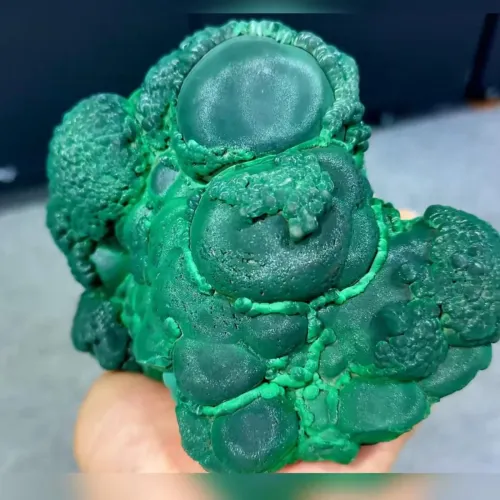
Picture scrolling through online forums while sipping coffee one Saturday morning, clicking through vibrant photos of wire-wrapped pendants. You bookmark one featuring that distinct veined green stone – malachite. Later, you find tutorials suggesting dunking metal jewelry into "miracle" patina solutions for antique finishes. But can this technique apply to items like yours? The confusion grows as you discover conflicting advice: some claim tumbled stones withstand chemical baths, others warn crystals might dissolve overnight. We've all faced this crossroad when personalizing accessories – that moment holding a handmade piece over a solution, hesitating. This guide dissects those contradictory claims by examining seven core aspects of malachite's interaction with patinas, replacing guesswork with observable facts about rock composition and metal behavior.
Picture this: you’re at a craft fair, admiring a wire-wrapped malachite ring where sunlight catches its green swirls. The artisan mentions they achieved the wire's antique look through patina solutions. Intrigued, you later research whether tumbled malachite could endure similar treatment for uniformity. This assumption surfaces frequently among hobbyists for understandable reasons: vendors market patinas as all-purpose finishes, while images show uniform aged effects on finished pieces. The disconnect begins when we confuse "metal surface treatment" with "whole jewelry immersion".
In reality, malachite fundamentally lacks chemical compatibility with standard patina formulations. Technically speaking, copper carbonate in malachite can react with oxidizing agents found in most commercial solutions. Unlike purely metallic items, mineral components don't develop controlled patination layers. Instead, prolonged exposure tends to initiate microscopic etch patterns that accumulate into visible surface pitting over time – a transformation distinct from intentional metal antiquing.
How can you assess similar compatibility questions? When encountering metal-finishing claims for multi-material pieces, distinguish between target substances: patina solutions bond chemically to metals but may interact unpredictably with stones. Next time, consider whether the product description explicitly acknowledges mineral boundaries or provides safety data for non-metallic elements. Three observable clues help: examine solution ingredients for acids or sulfides, research individual material reactions independently, and test on scrap materials before applying to valued pieces.
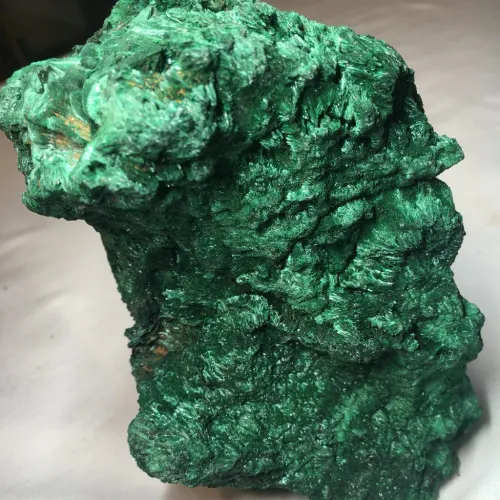
Imagine unboxing your first batch of tumbled malachite cabochons. Running fingers over their smooth-but-unpolished surfaces, they feel almost like river stones. This tactile experience explains why many assume tumble-finishing creates impermeable barriers – after all, if water rolls off, shouldn't chemicals? This notion appears especially in online DIY communities, where tumbled stones get labeled "hardened" or "stabilized" through the process. But beneath that pebble-like exterior lies greater complexity.
The clearer way to see it is that tumbled surfaces retain micro-pores that may absorb chemical solutions. Despite their tactile smoothness, malachite's crystal structure develops microscopic fissures during mechanical tumbling – nature's trade-off for those rounded edges. These tiny openings act like capillary channels when submerged, pulling patina solution deeper into the stone than expected. The process becomes riskier when vibration from tumbling weakens malachite's structural integrity over time. What starts as subtle absorption can manifest later as uneven discoloration spots throughout the material.
What this means for handling: before considering any liquid treatment, evaluate stone porosity. Hold your piece against bright light – do you see subtle light penetration around edges? Dampen a cotton swab with water and touch an inconspicuous area: rapid darkening indicates micro-porosity. When purchasing tumbled minerals, ask vendors about density grades. Stones showing characteristic concentric banding tend toward greater absorbency. Store pieces away from humidity sources between uses to minimize unintended moisture migration.
A friend of yours once excitedly showed off a patina-dipped necklace where the wire darkening seemed flawless. "It's all metal and stone – how different could minerals really be?" she'd argued. This perspective emerges from seeing malachite's banded patterns without knowing they reveal its copper-rich creation story. Visually, those signature green swirls suggest durability; chemically, they betray vulnerability. Malachite forms through copper deposit interactions with carbonate-rich waters, essentially nature's electrochemical experiment now facing modern chemistry.
Technically speaking, malachite's composition as a copper carbonate leads to two primary vulnerabilities in acidic solutions. First, acidic patina formulas can etch surfaces at the microscopic level, permanently altering light reflection that creates its characteristic shine. Second, immersion initiates dissolution at cleavage planes where chemical bonds naturally weaken. Though not immediate disintegration, this manifests as foggy surface layers developing over weeks post-treatment. Air exposure after patina treatment can accelerate oxidation processes within these altered surface layers.
How to check your piece's risk level without a chemistry lab: First identify solution pH levels when possible – anything below 5.5 increases reactivity chances. Second, understand malachite's 3.5-4.0 Mohs hardness range; softer minerals generally show greater solution sensitivity. Finally, conduct vinegar tests sparingly: dab distilled white vinegar on hidden areas with cotton swabs. Immediate bubbling signifies carbonate activity – a clear warning against immersion. Remember differences between grades; specimens with chalky veining often react more aggressively.
While browsing artisanal shops, you've probably seen brown glass bottles simply labeled "Metal Patina Solution" – their mysterious allure suggesting universal application. For wire-wrappers, this sparks visions of achieving gallery-worthy oxidation patterns with mere minutes of dipping. Ingredients lists become crucial decoding tools yet remain frustratingly vague, often listing "proprietary compounds." Many assume "solutions" imply water-like neutrality when most formulations function chemically active, especially toward non-metallic components.
In reality, common patina solution components like sulfides or ammonia salts create environments malachite inherently resists. Water-based patina solutions penetrate materials faster than gel variants precisely because they exploit molecular porosity. Weight ratios between metal wiring and malachite affect immersion stability differently than pure metal pieces, often creating solution-trapping cavities. Even rinsing post-treatment carries risks since trapped residues may gradually migrate into surrounding structures, perpetuating reactions long after removal.
What to ask before purchasing solutions: Always request material safety data sheets (MSDS) – reputable suppliers provide these. Check for ingredients like ferric nitrate, sulfur compounds or ammonia derivatives which indicate higher reactivity potential. When testing new patinas on wire only: isolate metal components with moldable putty barriers protecting stone areas. Time exposures precisely – start with 45 second tests rather than recommended "5 minute" durations advertised for solid metals. Document outcomes photographically to compare degradation over subsequent weeks.
Picture Sarah, a jewelry-maker preparing for her summer market stall. She immerses three wrapped pendants simultaneously – only to discover hours later that where copper wire met malachite, greenish corrosion blooms spread like miniature forests. This heartbreaking scene occurs when patina formulas migrate via capillary action into microscopic spaces between wire coils and stones. Unlike soldered settings where metal encloses stones completely, wire-wraps feature intentional gaps that beautifully frame stones yet chemically compromises integrity when immersed.
The clearer way to understand this involves two mechanical realities: First, wire connections adjacent to stone settings become vulnerable to accelerated tarnish upon patina exposure, often developing green accretion spots. Second, oxidation reactions can expand metal wire components differently than mineral sections, gradually loosening tension settings over months. Silver-plated wires show most dramatic degradation – surface layers corrode fastest, potentially exposing reactive base metals beneath to continued interaction with trapped solutions.
What this means for maintenance: When professional patina application occurs pre-setting, ensure metal components undergo thorough neutralization baths before contacting stones. For existing wire designs needing antiquing, adopt precision methods: wrap wires with anti-tarnish paper except target oxidation zones, using micro-brushes for localized application. Regularly inspect wire-to-stone junctions with magnification; early signs of trouble appear as powdery residues along wraps instead of uniform oxidization. Consider tension wraps over closed-loop settings when pairing with reactive stones like malachite, allowing easier disassembly if repairs become necessary later.
Imagine debating with fellow crafters whether a five-minute dip could replace hours of hand-rubbed antiquing. "What's the worst that could happen?" someone argues during your maker-space meetup. This practicality-versus-risk calculation overlooks malachite's delayed reaction patterns where effects manifest gradually over seasons. Realistically, immersion duration directly correlates with surface degradation risk yet the timeframe remains unpredictable – sometimes appearing within days, occasionally taking months before micro-fractures emerge near anchoring points. Multiple treatment sessions increase likelihood of irreversible surface damage exponentially.
In workshop reality, three safer approaches preserve design integrity without sacrificing aged-metal aesthetics. First, pre-patinate wires before wrapping using masking techniques to isolate stone-contact zones. Second, adopt indirect methods: warm the wire slightly with a dryer then gently rub paste formulations onto metal surfaces without contacting mineral elements. Third, utilize modern non-chemical alternatives like heat-based oxidization for copper-alloy wires or specialized metal paints simulating century-aged surfaces. Wire-wrapped settings often feature crevices that trap patina residue – targeted solutions avoid this pitfall completely.
How to implement smarter processes: Schedule stone-setting phases only after completing metal finishing including patination, neutralization, and sealing steps. Maintain separate workstations for chemical treatments versus organic/mineral handling to prevent accidental splashes or cross-contamination. When experimenting with new techniques, create documentation cards noting solution brands, exposure durations, and observable changes over subsequent weeks – these become valuable references for refining personal best practices.
Recall that time you discovered Grandma's malachite brooch where time had subtly altered its appearance – some bands appeared lighter, others developed miniature craters. That's the natural aging signature malachite develops over decades. Now imagine accelerating those changes through chemical baths expecting controllable outcomes. We instinctively associate mineral materials with geological timescales while forgetting these stones formed under specific geochemical conditions not replicable in our studios. Patina solutions essentially force unnatural timelines onto geological process participants never meant to interact.
Technically, patina reactions trigger cascading physical consequences: Polished malachite surfaces lose luster when exposed to reactive agents by undergoing microscopic texturing that scatters rather than reflects light. Thermal changes occurring during chemical treatment generate differential expansion between crystalline phases, potentially causing stress fractures detectable under magnification. The most overlooked yet critical factor involves malachite's structural relationship with metal frameworks – chemical stresses introduced to one get mechanically transferred to the other.
Assessing long-term durability when acquiring pieces involves inspecting three key zones: Examine stone areas nearest metal settings under magnification for micro-scale crumbling. Rub surfaces with soft dry cloths; excessive powder residue suggests degraded surface integrity. Document baseline conditions photographically against rulers to detect dimensional changes over time. For existing treated pieces, preventive care becomes vital: store in dark compartments to prevent light-accelerated reactions; minimize exposure to temperature/humidity swings; avoid ultrasonic cleaners whose vibrations stress chemically-altered structures.
A conversation starter at jewelry workshops often goes: "But how else achieve that genuine dark antique look?" The question misses modern alternatives yielding museum-quality results without harming mineral components. We've observed seasoned lapidaries transform shiny new copper wire into Victorian-era appearing fittings seemingly via magic – their secrets lie in combining physics, chemistry and artistry without full immersion. Effective antiquing recognizes that authentic "aged" looks develop uniquely across different metals and minerals, not identically through bath treatments.
Practical alternatives exist across four effective categories: Oxidation avoidance methods using proprietary metal alloys naturally developing stable dark oxides; Physical aging techniques employing specialized abrasives introducing micro-patina patterns matching decades of wear; Reactive gel pastes selectively applied only to metal surfaces then hand-buffed for graduated darkness; Protective patina substitutes involving surface-bonding nano-coatings tinted with mineral pigments. Each approach offers superior compatibility with delicate stones because they target metals exclusively through application method rather than material chemistry alone. Remember that metal wires may develop accelerated tarnish upon patina exposure – these alternatives circumvent this consequence.
Implementing smarter metal finishing: Begin by mapping which wire sections should develop patinas versus maintaining natural shine for visual contrast. Experiment with heated application – warming metals opens crystalline structures for deeper non-liquid staining penetration. Layer techniques: first apply texturing abrasives for microscopic "wear patterns", then add localized staining for dimension. For beginners, commercial rub-on patinas provide control; apply tiny amounts to microfiber cloths for precise gradations.
That day will inevitably arrive: you have wire-wrapped malachite needing enhancement while patina bottle beckons nearby. Recall this moment from our earlier imagined scenes – it’s where practical knowledge transforms into empowered decision-making. Apply the principles you've gathered by asking: Does this solution chemically respect malachite's copper carbonate composition? Could safer localized metal treatments achieve similar effects? Consider documenting outcomes photographically with dated notes to build your reference library.
Q: Can I dip malachite just briefly for subtle patina effects?
A: Even brief exposures can initiate micro-scale reactions becoming visible over subsequent weeks. Water-based solutions may penetrate porous areas within seconds. Alternative topical methods without immersion tend to offer greater control and safety.
Q: Does sealing malachite before patinating prevent damage?
A: While quality sealants create protective barriers, they may degrade over time when exposed to chemical agents. Solution residues trapped between sealant layers and the stone can accelerate deterioration unpredictably. Multiple treatment sessions increase these risks substantially.
Q: What about patina solutions marketed as "gem-safe"?
A: Carefully verify if "gem-safe" claims apply specifically to malachite, a copper carbonate mineral with unique vulnerabilities. Product testing documentation showing controlled trials with malachite adds credibility. Neutral pH formulas generally prove safer, though outcomes may still vary based on porosity.


$
