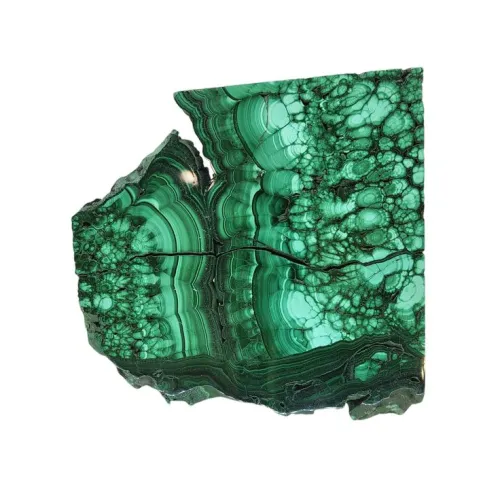
You're admiring that stunning banded green stone in a jewelry store when rain starts pattering outside. Suddenly you wonder – what if my new malachite piece gets caught in a downpour? Or later, while cleaning your mineral collection with a damp cloth, you hesitate. Will this harm those vibrant swirls? Such questions puzzle many collectors and jewelry wearers because we hear contradictory advice: "Never get it wet!" versus "A little water won't hurt." This article untangles myths from mineral science through real-life scenarios, helping you decode what actually happens when malachite meets moisture and how to protect those mesmerizing patterns.
Picture yourself browsing mineral shows, hearing vendors warn against water exposure like it's kryptonite. This notion sticks because malachite often darkens dramatically when wet, creating panic about permanent damage. Unlike many gemstones, its vivid reaction to moisture feeds anxiety – that sudden color shift seems too alarming to be harmless.
In reality, malachite consists of copper hydroxycarbonate minerals with the chemical formula Cu₂CO₃(OH)₂. This composition explains both its stunning green hues and water sensitivity. While the initial darkening surprises many, technically speaking, it's often temporary hydration rather than irreversible harm. The mineral tends to return to normal coloring once thoroughly dried if exposure was brief and neutral (not acidic).
Try this during your next museum visit or gem show: Watch how quickly water droplets evaporate from malachite samples versus other stones. Notice how the darkened areas gradually lighten after 15 minutes? Keep the "90-second rule" in mind – accidental splashes under two minutes rarely cause long-term issues when dried properly, unlike prolonged baths or high-humidity storage.
Imagine your friend complaining their malachite ring became dull after beach vacations. "It’s just water!" they say, confused. The hidden factor? Malachite's porous structure allows water absorption, potentially leading to internal moisture retention unseen by the eye. This sponge-like behavior separates it from non-porous gems like quartz.
The clearer way to see it is through scientific observation: Under magnification, malachite reveals micro-channels that draw water inward. This property stems from its crystalline structure formed during geological processes. Copper compounds within these micro-pores can interact with absorbed water or humidity over time, particularly in acidic environments.
When choosing malachite items, gently breathe on the surface during shop appointments or home inspections. Watch how quickly condensation forms and dissipates – stones absorbing moisture rapidly may need extra protection. Prioritizing properly sealed cabochons or wax-finished decorative pieces reduces absorption risk significantly.
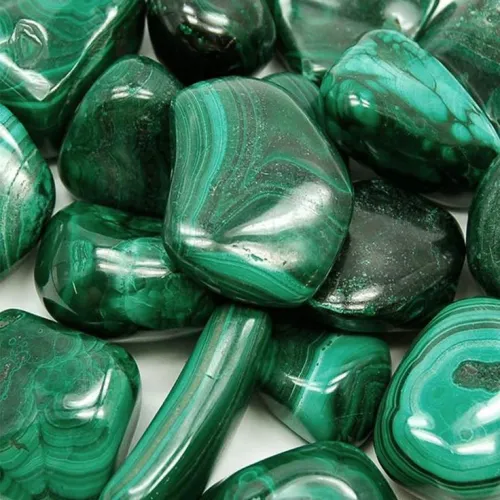
Picture this: Your malachite table centerpiece gets wine spilled on it. As you blot frantically, the deep emerald bands turn almost black. Panic sets in – has it ruined? Visual transformations like this fuel common alarms because surface darkening does look permanent in the moment.
In reality, temporary darkening of color occurs when malachite surfaces become wet due to light refraction changes. However, the concern thresholds matter: Extended water exposure may cause leaching of copper compounds, potentially resulting in surface alterations and lost luster if repeated over time. Notice how professional mineral displays use glass cases? Humidity control matters more than avoiding every drop.
Next time your malachite jewelry takes an unexpected swim, resist rubbing it – gently pat dry with microfiber cloths instead. Check for lingering dull patches after 24 hours in a dry environment. Permanent damage rarely occurs from single incidents but manifests through clouding or chalky residues after repeated improper exposure. Keep a small silica gel packet in storage containers – that visual check takes seconds.
A friend shows their new "rainforest malachite" while discussing how malachite forms near rivers. "If water creates it, why avoid moisture?" they ask. The contradiction baffles many since natural malachite formation involves water-rich processes in copper ore oxidation zones.
The clearer explanation? Surface geological processes differ from human interaction. While malachite develops in moisture-rich underground environments across millennia, daily exposure conditions are uncontrolled. Acidic water from household appliances or polluted environments may accelerate chemical reactions beyond natural rates. Thermal changes from water contact can induce micro-fractures during rapid bathroom-to-balcony drying.
Remember that geology display where malachite grows alongside azurite in water-rich environments? Compare museum specimens excavated from riverbeds versus desert mines – desert malachite shows less water damage in storage because its formation environment has different water chemistry. For your collection, consistently dry environments outperform cycling between humid baths and arid shelves.
Imagine debating whether to buy malachite earrings: "Will they survive summer sweat?" Users often conflate all moisture sources, from accidental splashes to steam rooms. Tactile experiences complicate things too – under moisture, malachite becomes more slippery and smooth, creating misleading sensations of vulnerability.
In practice, usage defines safety thresholds. Handwashing jewelry may involve 10-20 seconds of light water contact, posing less risk compared to hot tub exposure where heated or chemically-treated water increases reactions. Preservation often involves storing in dry environments with silica gel packs to mitigate moisture accumulation. That decorative bowl? Keep away from constantly damp kitchen windowsills where micro-abrasions open more pore pathways.
Adopt the "three-blink" rule when malachite encounters water: If your stone dries faster than three blinks, damage is unlikely. For frequently worn pendants, apply museum-preservation logic: wipe skin-contact zones after humid outings to prevent oils from mixing with moisture. Notice how lapidaries display malachite under cool LED? Avoid direct heat sources when drying wet pieces to prevent micro-cracks.
Over coffee, someone claims washing malachite "sucks out its healing energy" – pseudoscience you'll counter calmly. Common misconceptions include "all water permanently discolors malachite" or "even raindrops cause cracking." These myths persist because dramatic initial reactions seem catastrophic and misinformation spreads faster than mineralogy facts.
Technically speaking, minor water interactions typically pose lower risks compared to sustained exposure or submersion. Structural integrity may weaken primarily when water absorption isn’t managed well, raising risks of cracking during temperature shifts. Reality check with jeweler’s loupes: Clouding underneath surfaces usually reveals cumulative damage from humidity rather than single accidents.
When online debates spark panic, examine your malachite under bright light for pitting (tiny craters) – a true sign of acid damage. For newly acquired pieces, place them beside copper pennies overnight; if the malachite gets darker while coins remain bright, porosity problems exist. Remember: Authentic concerns involve sustained humidity exposure patterns, not quick kitchen splatters.
Next time you see malachite in the wild, whether in galleries or during showers, pause for 10 milliseconds: Notice its light reflection before touching. When storing, feel for storage-box dryness. When wiping dust, choose feather-light contact. These micro-checks – watching reactions, controlling contact duration, maintaining stable environments – transform mineral care from mystery into mindful moments rather than mystical rituals. After years of mindful observation, you'll be the calm expert explaining: "Watch these bands; see how their moisture response tells you everything?"
Q: Can I wear malachite jewelry at the beach?
A: Brief seawater splashes may rinse off, but prolonged saltwater submersion can create micro-abrasions and salt crystal formations leading to surface pitting if not properly rinsed.
Q: Does washing hands with malachite rings damage them?
A: Occasional 20-second handwashing under neutral pH soaps generally causes negligible damage, but regular exposure to hand-sanitizer gels and chlorinated water can degrade polished surfaces over months.
Q: How fast does water damage appear?
Temporary darkening happens instantly, but long-term deterioration like cloudiness or pitting may appear after 15-50 exposure cycles depending on water chemistry and drying conditions.
Q: Should I avoid humid cities for malachite storage?
In high-humidity locations like tropical climates, silica gel packets in enclosed display areas can effectively mitigate environmental moisture more than relocation of collections where temperatures tend to fluctuate.


$
