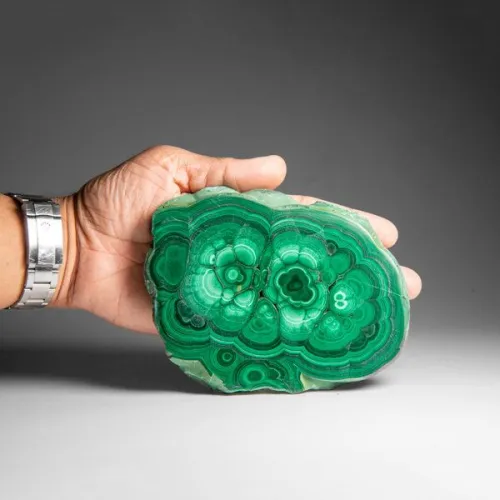
Picture yourself browsing a gem shop, tracing fingers over malachite's swirling green patterns as the shopkeeper promises natural materials are "always safe." Later, you consider placing it in your aquarium or wonder about accidental spills on malachite coasters. Confusion blooms when online forums claim copper-rich stones purify water while others warn of toxicity. These contradictions reflect our tendency to trust nature's beauty over chemistry. This guide transforms those uncertainties into actionable clarity by breaking down malachite's water interactions through verifiable science—not mystic assumptions or marketing slogans. We'll explore seven critical aspects to reclaim your confidence when handling this mesmerizing mineral.
Imagine your friend proudly displaying malachite bookends beside their drinking water carafe. "It's just decorative," they shrug, unaware microscopic particles might migrate. Everyday intuition equates solid stone with immutability, while holistic blogs may imply crystals "energetically cleanse" liquids. This safety confusion often springs from malachite's earthy appearance—we project the stability of granite onto a mineral with very different chemistry. Even museum displays rarely explain why exhibit cases keep stones climate-controlled.
In reality, safety depends entirely on duration and conditions. Technically speaking, malachite can remain visually stable during brief, accidental spills thanks to its moderate Mohs hardness (3.5-4). The clearer way to see it is: any water interaction risks starting gradual copper carbonate dissociation. One key technical feature involves solubility triggers—moisture combined with acidic conditions tends to initiate copper ion release. Another is exposure time: particles may dislodge faster during prolonged soaking compared to momentary drizzles.
What this means for you: Evaluate contact scenarios like a scientist, not a mystic. Before placing malachite near fish tanks or children's cups, ask: Could this involve warm liquid? Might citrus drinks or vinegar-based cleaners accidentally touch its surface? Teach visitors to handle pieces like porous artifacts: admire with eyes, then wash hands. For your next collectible purchase, mentally replace "it's natural" with "how will I shield it from humidity?"
Recall admiring malachite’s deep swirls as the jeweler murmured, "Nature’s artwork." What they didn't mention: that mesmerizing green comes from copper, bound within crystalline patterns. People seldom question mineral safety because geological structures appear utterly solid—like tiny green bricks cemented together. Yet under magnification, malachite reveals itself as clusters vulnerable to molecular-level invasions. Why trust surface impressions? Our brains interpret dense materials as chemically inert, overlooking what’s happening within atomic handshakes.
The clearer way to see it is: malachite primarily consists of copper carbonate hydroxide [Cu₂CO₃(OH)₂]. This compound contains between 55-60% copper by weight. When water molecules encounter this structure, they may penetrate gaps in the crystal lattice. Technically, carbonate minerals tend to react with acids, meaning water acidity determines structural integrity. One critical feature involves copper's ionic charge: loosely bound copper ions can leach when molecular bonds weaken.
What this means for you: Develop an automatic copper-check habit. When seeing vibrant greens or turquoise stones (commonly copper-bearing), pause before water exposure. Ask yourself: "Is this polished, tumbled raw, or composite?"—infer porosity from form. Touch surfaces expecting coolness but remember this doesn't equal impermeability. For your cabinet displays, place malachite behind glass rather than open shelves where humidity accumulates.
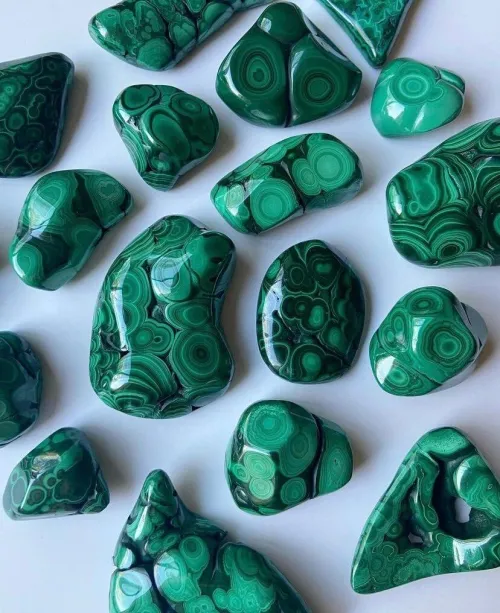
Picture dropping malachite beads into a vinegar-filled container to "cleanse" them—a common ritual you might’ve witnessed at metaphysical shops. Water seems universally benign to us. But place that scene in geology terms: liquid meeting copper carbonate creates conditions similar to acidic mining drainage. When we assume all water interactions are equal, we overlook pH as the invisible game-changer. Those Instagram reels showing malachite submerged in bowls rarely disclose how acidity causes silent material breakdown.
In reality, malachite tends to remain stable in alkaline or neutral water but shows dissolution tendencies in acidic conditions. Technically speaking, the mineral's reaction mechanisms involve proton exchange: hydrogen ions attack carbonate groups, freeing copper ions to migrate. Key variables include immersion duration (weeks vs seconds) and agitation level—think still pond placement versus flowing faucet exposure. The technical feature "leaching processes under prolonged immersion" indicates copper ions can concentrate significantly over time.
How to read this correctly: Treat water pH like a chemical translator. Before any malachite contact—whether accidental splash or planned display—test liquid acidity using cheap pH strips. Memorize this hierarchy: lemon juice (pH~2) > rainwater (pH~5.5) > tap water (pH~7) > ocean water (pH~8) in dissolving potential. Store your specimens thinking "dry as desert air," using silica packets in display cabinets. When friends suggest water rituals, counter with: "Actually, let's appreciate its dry brilliance today."
A friend once lamented their tarnished malachite ring, blaming "cheap craftsmanship." What actually happened? Six months of hand-washing altered its surface physics while she dreamt of unchanging permanence. We judge mineral stability by immediate appearance, a habit rooted in admiring museum pieces behind glass. Malachite's initial waxy luster deceives us; its surface seems waterproof like sealed marble. But water molecules operate on microscopic scales untouched by polish—slow dancers wearing away stone integrity particle by particle.
Technically, malachite’s vitreous to silky luster may gradually dull under moisture exposure due to micro-abrasion and chemical etching. The mineral's hardness (3.5-4 Mohs) means softer than quartz particles in tap water can microscopically scratch surfaces. Additionally, water intrusion can subtly expand internal structures, appearing as cloudy patches or light scratch networks. Remember the technical feature "color ranges from light to dark green": darker hues contain denser copper concentrations, potentially increasing leach risks under identical conditions.
How to check next time: Become a luster detective. Compare your malachite’s sheen monthly under angled light. Notice any transition from glass-like reflections toward waxy dullness—this signals moisture impact long before visible damage appears. When buying new pieces, run this quick audit: tap it gently (intact stones ring clearly), check back surfaces for untreated areas, examine swirls (dense patterns resist better). Teach children: "We look with eyes, not under water!"
You've likely seen photos of breathtaking malachite stalactites glistening inside damp caves. Nature integrates it beautifully with water—why panic about home display? This false equivalence trips many collectors. We mistake mineral formation timelines (thousands of years) with human-exposure periods and geological-scale dilution for safety. Rain filtering through malachite-rich copper deposits creates entire ecosystems where plants evolved copper tolerance—but your betta fish won't adapt overnight.
What science reveals: natural water sources balance malachite presence through mineral dilution, neutral pH bedrock buffers, and aquatic life adaptations. Technically speaking, environmental copper dispersal involves complex factors like flow rates (mountain streams vs. stagnant ponds) and microbial interactions missing in home tanks. The technical feature "formation occurs in copper deposits near water" doesn't equal safe cohabitation: dissolved copper concentrations remain below thresholds harming local species through millennia of adaptation.
How to apply environmental lessons: Never replicate cave environments in enclosed living spaces. Research your locality’s groundwater pH before decorating garden ponds with stones. Understand dilution is your ally—a brief shower exposure differs from constant aquarium submersion. Before placing any stone in planters, ask: How will fertilizer acidity interact with its chemistry? Natural isn't automatically safe: your home isn't Earth's geological timescale.
Picture unboxing malachite earrings and instinctively wanting to rinse them... pause. Daily moments harbor unspoken assumptions about "washing makes things safer." But water exposure can actually create new hazards like copper dust residues when malachite returns to dry conditions. We inherit habits: washing produce, cleaning countertops. Translating this to minerals? Problematic. Gem artisans know water should touch malachite only during cutting with protective gear—not because it's "evil," but due to preventable physical and chemical reactions.
In reality, decorative applications function perfectly when limiting liquid contact. Technically, malachite's stability shines during brief incidental splash events followed by prompt drying—say droplets on a coaster wiped within minutes. The technical feature "handling requires precautions against skin contact with potential residues" references how surface dust from polishing or degradation may transfer copper more readily than the solid stone itself. This is especially relevant for carved items where pores trap particles.
Action plan: Establish three handling protocols. For dry applications (bookends, clocks), regularly dust using microfibers—no sprays. For occasional contact items (coasters, napkin rings), wipe spills immediately and annually apply museum-grade microcrystalline wax. For body adornment, establish jewelry rituals: apply perfumes/hairspray first, remove before swimming/handwashing, polish gently with dry cloths. Share this approach: "I preserve my malachite's story by preventing water chapters."
Remember seeing someone wear malachite rings while gardening? Such scenes seem harmless until you imagine acidic soil dampening stone undersides. Safe malachite partnership requires understanding humidity's sneak attacks, not just dramatic water immersion. We monitor visible threats like cracked pipes but ignore ambient moisture crawling through porous stones over seasons. That drawer storing crystals needs airflow as much as your shoes do—prevention beats repair.
Technically speaking, malachite management prioritizes environment control over reaction reversal. The critical features? First, moisture content in environments influences degradation speed (think steamy bathrooms versus air-conditioned lounges). Second, stability patterns: malachite tends to resist copper leaching below 40% relative humidity, while risks increase substantially above 70%. Last, containment protocols: surfaces contacting malachite should be non-porous and cleaned after handling using damp—not wet—cloths.
What this means practically: Transform storage into preservation science. Place silica gel packets underneath display items, refreshing indicators quarterly. Monitor room humidity using $10 hygrometers, targeting 40-50% levels. When accidents occur, gently dab—don't rub—spills with tissue and air-dry overnight. For families, institute this rule: "Malachite zones" become designated dry-use spaces like bookshelves or wall art niches. Future management starts with recognizing invisible moisture as malachite’s quiet opponent.
Malachite doesn't require fearful avoidance but knowledgeable respect. Three actionable ideas bridge these stories to your reality: test suspicious liquids with pH strips like kitchen scientists, establish "touch then wash hands" habits with malachite items, and prioritize visible stability checks over vague promises of energetic properties. Next time you browse crystals online or admire home decor magazines questioning malachite placements, pause and recall water's interaction with copper chemistry—not folklore narratives.
Imagine revisiting that gem shop with sharpened awareness while holding malachite’s cool weight. What would you pay attention to now? Notice unsealed surfaces? Inquire about storage humidity? Skip water-submersion myths? This perspective transform choices from reactive concern to empowered understanding. Keep those swirling green patterns exactly where they shine brightest: away from sustained moisture, enjoyed as marvels of nature’s artistry grounded in testable truth.
Q: Can malachite go in saltwater as a natural antibacterial alternative?
A: Saltwater doesn't neutralize malachite dissolution tendencies—in fact, salinity increases copper compounds' molecular mobility. Copper ion release still occurs, potentially impacting microbial communities disproportionately. Traditional antibacterial minerals like silver have different interaction mechanics.
Q: Does malachite powder in water offer health benefits?
A: Never intentionally consume malachite in any form. While trace copper is essential nutritionally, malachite-derived copper ions can concentrate unpredictably in beverages. Safer dietary copper sources include nuts, seeds, and legumes, avoiding uncontrollable mineral dosing.


$
